Why Iran Is So Important to the Russia-China Alliance

Iran’s energy resources, Persian Gulf position and alternative trade routes make it strategically important to Russia and China.
Iran is often described as a regional power caught in a confrontation with the United States and Israel. But its importance extends far beyond the Middle East.
For Russia and China, Iran represents a major energy supplier, a geographic bridge between Asia, the Persian Gulf and Europe, and a politically aligned partner willing to challenge the Western-led international order.
That importance was displayed again at the Shanghai Cooperation Organisation summit in Bishkek, where leaders approved a joint declaration condemning military attacks on Iran and opposing unilateral economic sanctions.
The declaration offered Tehran meaningful diplomatic support. It also exposed an important reality: Russia, China and Iran are increasingly aligned, but they are not bound together by a NATO-style military alliance.
Iran may be central to their shared geopolitical strategy, yet Moscow and Beijing have carefully avoided promising to fight a war on Tehran’s behalf.
Iran Gives China Access to Sanctioned Oil
Energy is the most immediate connection between Iran and China.
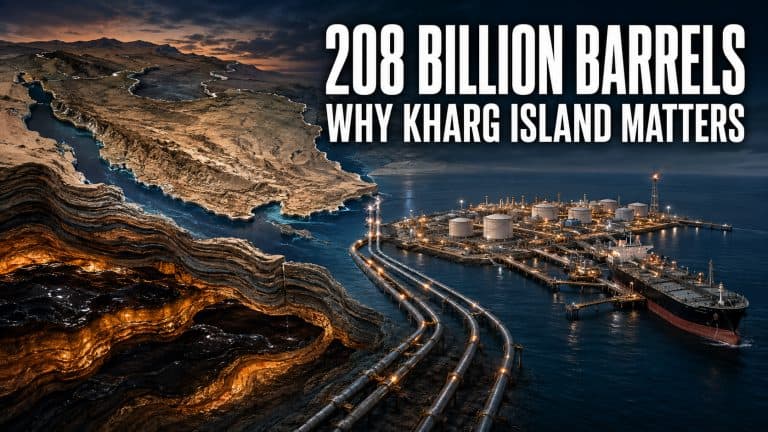
Iran possesses approximately 208.6 billion barrels of proven crude oil reserves, placing it among the largest petroleum powers in the world. Before the current conflict, China was purchasing the overwhelming majority of Iran’s exported crude.
By the end of 2025, China was reportedly importing as much as 1.4 million barrels per day from Iran. That represented approximately 13 percent of China’s total crude imports and around 80 percent of Iran’s exported oil.
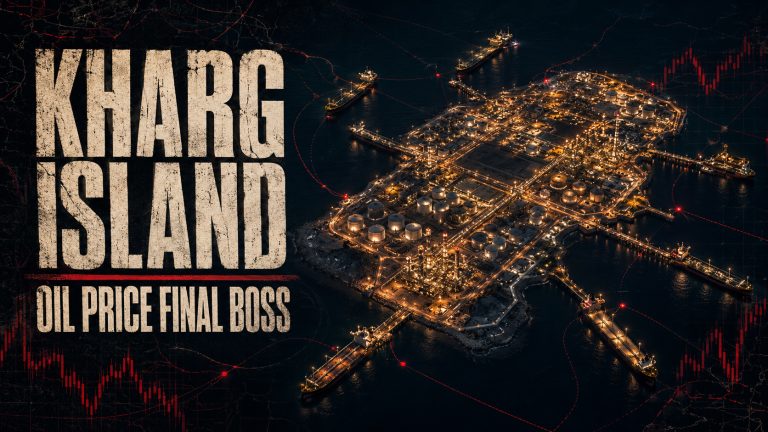
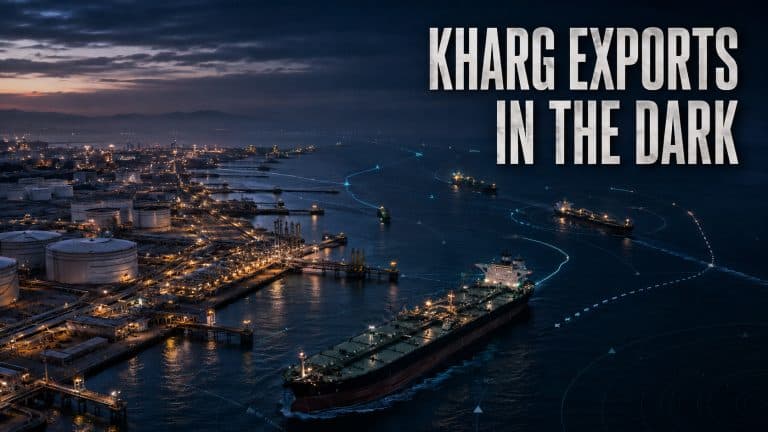
Much of that petroleum passed through the Kharg Island oil export terminal, which historically handles approximately 90 to 95 percent of Iran’s exported crude.
The arrangement benefited both countries.
China received discounted petroleum outside the traditional Western-controlled trading system. Iran received essential export revenue despite U.S. sanctions designed to isolate its energy sector.
That relationship has been severely tested by the current conflict. Iranian crude loadings reportedly collapsed from approximately two million barrels per day in March to between 220,000 and 255,000 barrels per day in August.
The consequences are now reaching Chinese refiners. With Iranian supplies restricted, China’s Sinopec has increased purchases of Russian crude, while smaller independent Chinese refiners have been forced to compete for more expensive alternatives.
Iranian oil is therefore not merely another supply option for Beijing. Its disappearance changes purchasing patterns across China’s refining industry and increases competition for Russian, Iraqi, Brazilian and Canadian crude.
Iran Gives Russia a Route to the South
Iran’s value to Russia is less about buying Iranian oil and more about geography.
Western sanctions and the loss of traditional European markets have pushed Moscow to develop trade routes facing south and east. Iran provides Russia with overland access toward the Persian Gulf, Indian Ocean and markets in South Asia.
The International North-South Transport Corridor is central to that strategy.
The approximately 7,200-kilometer network combines railways, highways and maritime routes connecting Russia with Iran, Azerbaijan, Central Asia and India. Its purpose is to move cargo between Russia and the Indian Ocean without relying entirely on Western-controlled shipping and financial systems.
Iran is the indispensable middle section of that route.
Without Iranian territory and ports, Russia has no comparable direct corridor from the Caspian region to the Persian Gulf and Indian Ocean. Iran therefore provides Moscow with something more durable than military cooperation: an alternative commercial geography.
Russia and Iran Have Formalized Their Partnership
Russia and Iran signed a 20-year Comprehensive Strategic Partnership Treaty in January 2025.
The agreement calls for expanded cooperation in defense, energy, finance, transportation and peaceful nuclear development. It also supports military exercises, collaboration against shared security threats and greater cooperation between Russian and Iranian energy companies.
The two countries have additional reasons to work together.
Both face extensive Western sanctions. Both have sought alternatives to the U.S. dollar and Western banking networks. Both benefit from systems that allow sanctioned countries to continue trading with one another.
Iran also became an increasingly important military partner after Russia’s invasion of Ukraine. Western governments accused Tehran of supplying Russia with drones and other military assistance, allegations that Iran has disputed or qualified at different times.
Their relationship is no longer temporary or purely transactional. It is being built into treaties, transportation corridors, financial mechanisms and long-term strategic planning.
Iran Connects the Russia-China Bloc to the Persian Gulf
Iran gives Russia and China a permanent strategic presence beside one of the world’s most important energy corridors.
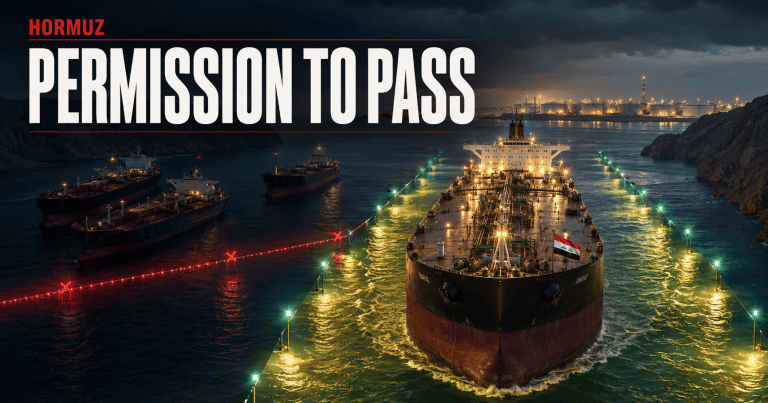
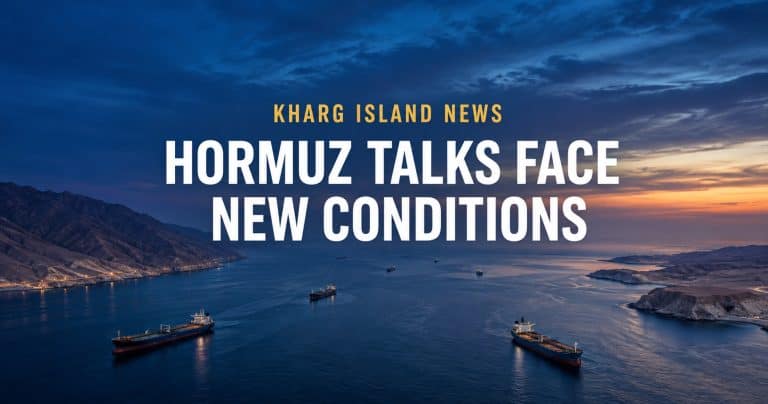
The Strait of Hormuz carried nearly 15 million barrels of crude oil per day in 2025—approximately one-third of global seaborne crude trade. Much of that petroleum was destined for Asian markets.
Iran sits along the strait’s northern shore and has repeatedly demonstrated that it can influence commercial shipping through inspections, seizures, military deployments, mines and restrictions on vessel movement.
Tankers departing Kharg Island must travel across the Persian Gulf and pass through the strait before reaching open water. That makes Iran’s geographic position important not only to its own petroleum exports but also to shipments from Iraq, Kuwait, Saudi Arabia, Qatar and the United Arab Emirates.
For China, which depends heavily on imported energy, stability in the strait is essential.
For Russia, disruption can have a more complicated effect. Reduced Persian Gulf exports can raise global petroleum prices and increase demand for Russian supplies, even while creating broader economic instability.
Iran consequently provides the emerging bloc with both an energy asset and a powerful geopolitical pressure point.
BRICS and the SCO Give Iran Diplomatic Protection
Iran is now a full member of both BRICS and the Shanghai Cooperation Organisation.
These organizations do not function as military alliances, but they give Tehran access to diplomatic relationships, economic initiatives and international forums that Western governments cannot easily control.
Membership also makes attempts to isolate Iran more difficult.
When Russia, China and other SCO members jointly condemn attacks or sanctions against Iran, they strengthen Tehran’s claim that it is not an isolated state but part of a larger movement seeking a more multipolar international system.
That support matters politically, particularly when Iran faces pressure at the United Nations or attempts by Western governments to expand sanctions.
But This Is Not a Mutual-Defense Alliance
Calling Russia, China and Iran an “alliance” can create the impression that an attack against one will automatically bring the others into the war.
The evidence does not support that conclusion.
Russia’s strategic treaty with Iran specifically lacks a mutual-defense provision. It requires consultation and cooperation but does not obligate Moscow to enter a war on Iran’s behalf.
China’s 25-year cooperation agreement with Iran focuses heavily on energy, infrastructure, trade and long-term political coordination. It is not a military-defense treaty.
That distinction has become unmistakable during the current conflict. Russia and China have condemned attacks on Iran, opposed Western sanctions and supported diplomatic negotiations. Neither has directly entered the war to defend Tehran.
Moscow and Beijing want Iran to survive as a friendly regional power. They do not necessarily want to inherit Iran’s wars.
Iran Is Too Important to Lose—but Too Dangerous to Fully Defend
Iran offers Russia and China several strategic advantages simultaneously:
- Enormous oil and natural-gas reserves
- Access to the Persian Gulf and Indian Ocean
- Control over territory essential to north-south trade
- A large regional market resistant to Western pressure
- Military and intelligence cooperation
- Membership in BRICS and the Shanghai Cooperation Organisation
- A shared interest in weakening Western sanctions and financial dominance
Few countries can provide that combination.
However, Iran’s confrontations with the United States, Israel and neighboring states also make it a dangerous partner. A formal military commitment to Tehran could pull Russia and China into a much wider war.
That is why their support remains carefully calibrated.
Iran is important enough for Moscow and Beijing to protect diplomatically, support economically and cooperate with strategically—but thus far, not important enough for either power to risk direct war with the United States.
That tension defines Iran’s position inside the emerging Russia-China bloc.
It is not a fully protected member of a military alliance. It is the bloc’s southern anchor, its gateway to the Persian Gulf and one of its most consequential pressure points against Western power.
Sources
- Al Jazeera: SCO declaration supports Iran and condemns attacks
- Reuters: China increases Russian purchases as Iranian oil dwindles
- Reuters: Iran’s crude exports stall
- Reuters: Russia-Iran strategic treaty provisions
- Asian Development Bank: International North-South Transport Corridor
- IEA: Strait of Hormuz energy data