208 Billion Barrels Beneath Iran: Why Kharg Island Is the Valve That Controls the Flow
Iran is sitting above one of the largest petroleum reserves on Earth.
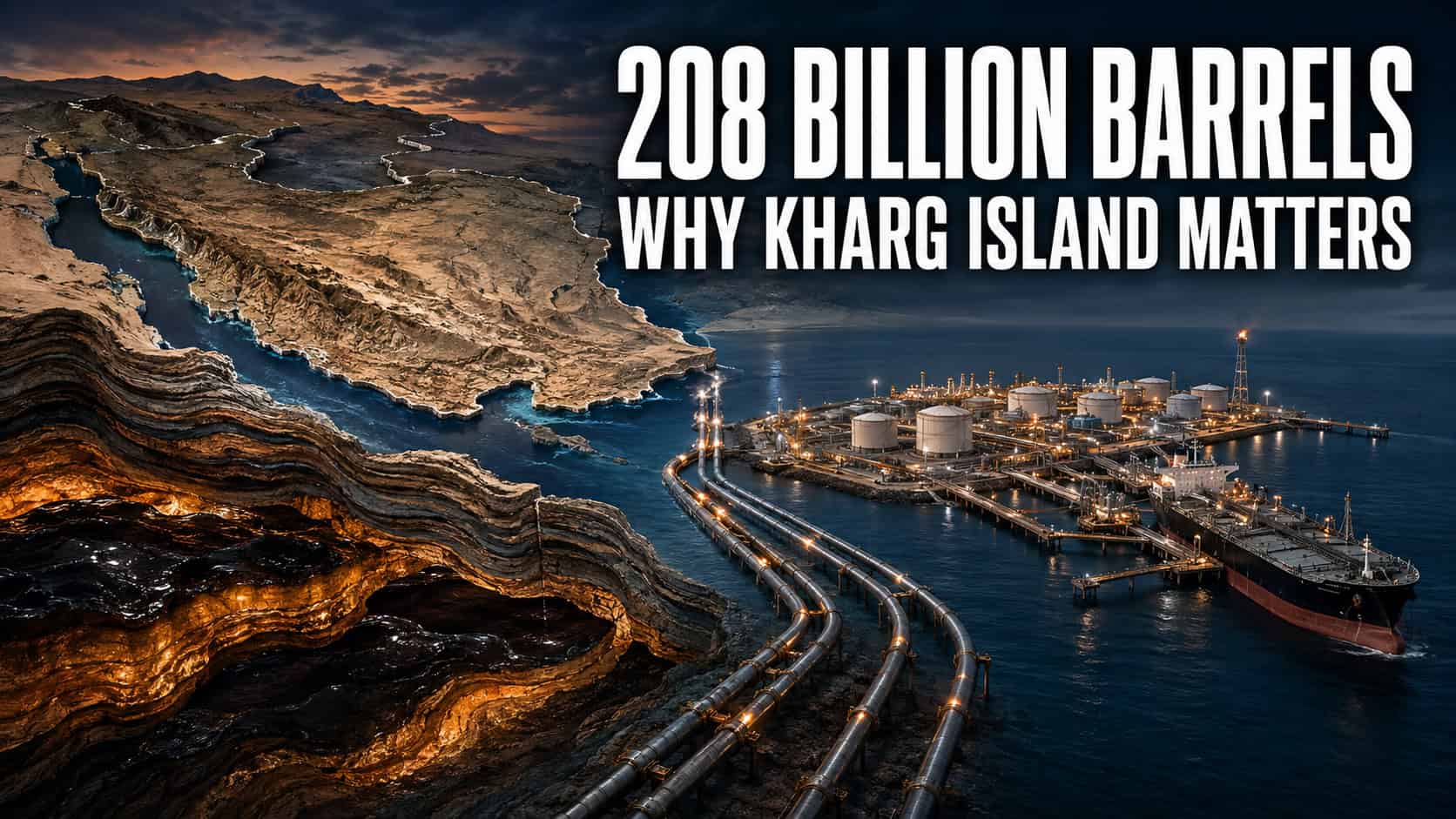
According to figures published by OPEC, Iran possesses approximately 208.6 billion barrels of proven crude oil reserves. That represents roughly 12 percent of the world’s proven oil and places Iran among the three largest holders of crude reserves globally.
But oil underground has limited strategic value unless it can be produced, transported and sold.
That is where Kharg Island enters the picture.
The small island in the northern Persian Gulf functions as the primary outlet for Iran’s enormous petroleum industry. Kharg does not pump all that oil from beneath the island itself. Instead, pipelines carry crude from fields across Iran to the island, where it is stored, blended and loaded aboard tankers bound for foreign markets.
In practical terms, Iran owns the oil—but Kharg Island controls the door.
How Much Oil Does Iran Produce?
Before the latest wartime disruptions, Iran was one of the world’s largest crude producers and the third-largest producer in OPEC.
According to secondary-source data reported by OPEC, Iran produced approximately 2.48 million barrels of crude oil per day in July 2026. That was similar to its June production of roughly 2.45 million barrels per day.
Iran also produces condensates and other petroleum liquids, meaning its total liquid petroleum output is higher than its crude-only figure.
These numbers remain well below what Iran could potentially produce with unrestricted access to investment, equipment and international markets. Years of sanctions have limited foreign investment, complicated equipment purchases and forced Iran to sell much of its oil through opaque trading networks.
The resource itself, however, remains immense.
At 208.6 billion barrels, Iran’s proven crude reserves are more than 80,000 times its current daily crude production. That does not mean every barrel can be recovered easily or profitably, but it illustrates the extraordinary scale of the petroleum resource beneath the country.
How Much Oil Normally Passes Through Kharg Island?
Kharg Island handles approximately 90 to 95 percent of Iran’s crude oil exports, depending on the period and the organization conducting the estimate.
Kpler reported that during the 12 months preceding the current conflict, Iran exported approximately 587 million barrels of crude, averaging about 1.61 million barrels per day.
Of that total, approximately 553 million barrels—or 1.52 million barrels per day—departed through Kharg Island.
That means a landmass measuring only a few miles across handled roughly 94 percent of Iran’s exported crude.
Kharg has also demonstrated the ability to move oil much faster when Tehran wants to accelerate shipments. Before the war, Iran increased exports to approximately 2.17 million barrels per day in February. During the week beginning February 16, shipments reportedly reached a record 3.79 million barrels per day.
Those figures measure oil loaded for export, not oil physically produced on Kharg Island.
Nearly 20 Million Barrels Are Stored on the Island
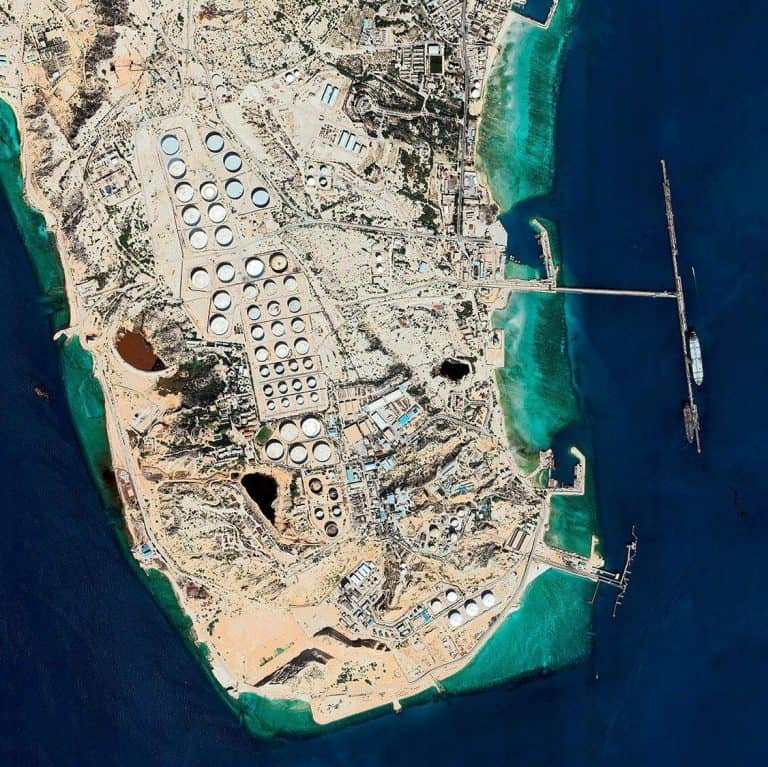
Kharg is more than a tanker dock. It is also a massive oil-storage complex.
The island has capacity for approximately 30 million barrels of crude oil. Kpler estimated that Kharg held about 19.45 million barrels at the end of August 2026.
For perspective, that amount could fill approximately 9½ Very Large Crude Carriers, assuming each vessel carried around two million barrels.
It is also enough oil to supply the entire United States for nearly one day.
This concentration of storage tanks, pipelines, pumping stations and tanker berths makes Kharg one of the most strategically sensitive pieces of energy infrastructure in the Middle East.
Kharg’s Capacity Is Not the Same as Its Current Output
The distinction between capacity and actual exports has become critical during the present conflict.
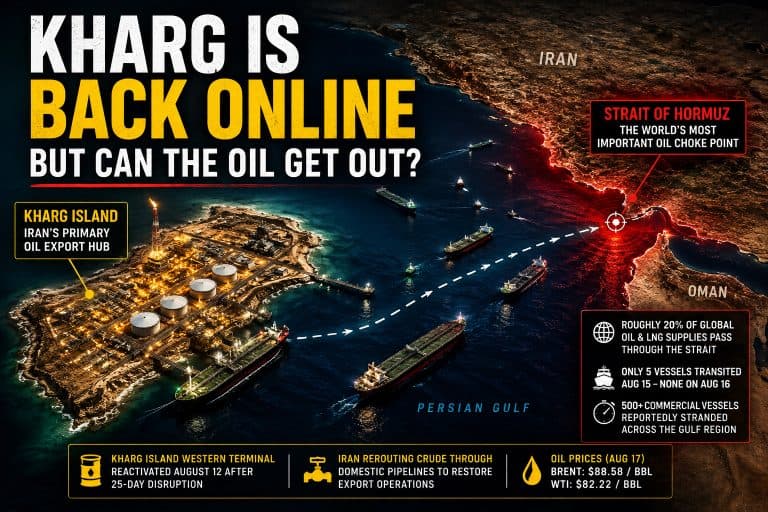
Although Iran continued producing approximately 2.48 million barrels per day in July, Kpler estimated that the country loaded only about 251,000 barrels per day for export during August.
Reuters separately reported that Iranian crude loadings fell from approximately two million barrels per day in March to between 220,000 and 255,000 barrels per day in August as restrictions on tanker movements sharply reduced Iran’s ability to move crude through the Strait of Hormuz.
In other words, Iran may still be pumping millions of barrels daily, but only a fraction of its normal export volume is currently reaching foreign buyers.
The oil has not disappeared. It must instead be consumed domestically, placed into storage, transferred through alternative routes or left underground by reducing production.
That growing imbalance is precisely why Kharg Island matters so much.
Iran’s Oil Wealth Depends on One Narrow Export System
Iran’s petroleum system has three separate numbers that should not be confused:
- Approximately 208.6 billion barrels of proven crude remain underground.
- Iran recently produced approximately 2.48 million barrels per day.
- In normal conditions, approximately 1.5 million barrels per day of exported crude passes through Kharg Island.
The island is therefore not Iran’s largest oil field. It is something potentially more consequential: the principal valve between Iran’s underground wealth and the global economy.
If Kharg remains operational but tankers cannot safely depart, Iran’s export revenue still collapses. If shipping lanes reopen but Kharg’s terminals are disabled, the result is much the same. Both the island and the sea route beyond it must function for Iranian crude to reach its customers.
That dependence explains why every claim, threat or military action involving Kharg Island immediately attracts the attention of governments, traders and energy markets worldwide.
Iran may have more than 200 billion barrels beneath its soil—but much of its ability to monetize that oil runs through one very small island.