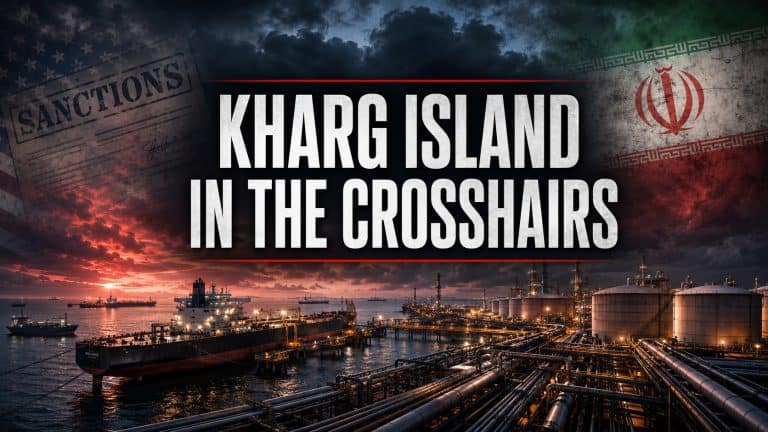

Kharg Resumes Loading as Iran’s Export Route Remains Strained
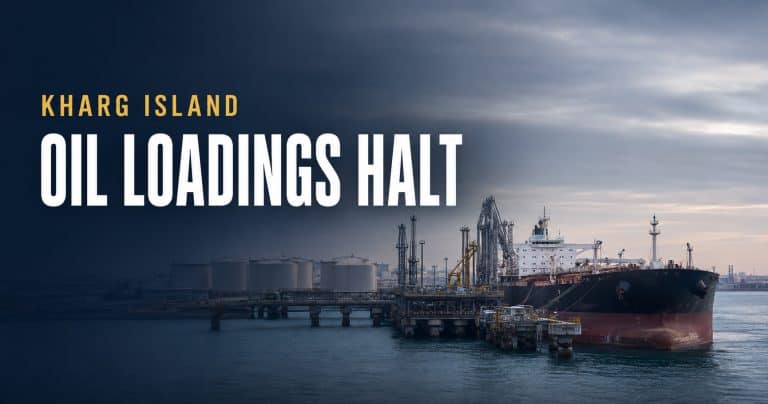
Kharg Island Oil Terminal Reactivates After 25-Day Standstill
August 14, 2026
Iran’s critical Oil Export Terminal on Kharg Island has shown renewed activity after weeks of near-total inactivity.
Moreover, the confrontation over shipping through the Persian Gulf continues to intensify.
New satellite and maritime intelligence indicates that Kharg Island’s western Oil Export Terminal resumed operations on August 12.
However, it had remained empty for 25 straight days.
This development signals that Iran is attempting to restore limited export activity from its main crude oil terminal.
However, the effort continues despite the U.S. naval blockade.
A Tanker Returns to Kharg
Maritime intelligence firm Windward reported a VLCC-class tanker from satellite imagery dated August 12.
It measures roughly 333 meters and berthed at Kharg Island’s western terminal.
The vessel had reportedly been waiting near the island since July 11 before finally moving to the loading facility.
Additional satellite radar imagery collected on August 13 showed the tanker still berthed and apparently loading.
The arrival ended a remarkable 25-day period in which the western terminal had remained empty.
However, activity across Kharg Island remains far below normal levels.
The island’s eastern oil terminal remained empty for 14 consecutive days as of August 13, while the LPG terminal had been empty for 17 consecutive days.
Approximately 16 tankers operating without normal tracking transmissions were also observed waiting near Kharg Island.
From Complete Standstill to Limited Activity
The latest development follows an extraordinary shutdown at Iran’s primary oil export hub.
Vortexa shipping data cited by Windward recorded zero departures from Kharg Island between July 31 and August 11.
Satellite imagery from August 11 showed all three major terminals empty.
Just one day later, that picture changed.
The arrival of the VLCC at the western terminal does not mean Iranian oil exports have returned to normal. Instead, it appears to represent a limited restart occurring under intense military and economic pressure.
That distinction is important.
Kharg Island historically handles the overwhelming majority of Iran’s crude oil exports, making sustained disruption at the island potentially devastating for Tehran’s ability to generate foreign currency from petroleum sales.
U.S. Says Blockade Can Continue “Indefinitely”
The renewed activity at Kharg comes as Washington signals that pressure on Iranian maritime exports will continue.
U.S. Defense Secretary Pete Hegseth said on August 13 that the United States has sufficient naval resources to maintain its blockade of Iranian ports indefinitely by rotating ships through the region.
The blockade is intended to restrict Iranian shipping while allowing vessels traveling to and from non-Iranian ports to continue operating.
According to Reuters, U.S. forces have redirected more than 55 commercial vessels attempting to breach the blockade since it was imposed.
The United States temporarily lifted the blockade for approximately one month beginning in mid-June before reinstating it following the collapse of diplomatic progress.
The Strait of Hormuz Crisis Deepens
The situation surrounding Kharg Island cannot be separated from the growing confrontation in the Strait of Hormuz.
Commercial traffic through the waterway remains dramatically below pre-war levels.
Kpler data reported by Reuters showed only nine commodity vessels passing through Hormuz on Thursday, August 13. That was an increase from five the previous day but still below the August daily average of 12.
Before the conflict, more than 130 vessels reportedly passed through the Strait each day.
Iran and the United States are also making competing claims regarding control of the strategic waterway.
Iran maintains that the Strait remains under Iranian control and has discussed imposing restrictions on vessels associated with countries it considers hostile.
The United States, meanwhile, says its naval forces effectively control access through the region.
Two More Ships Attacked
The maritime confrontation escalated further on August 13 when two vessels operated by the Abu Dhabi National Oil Company were attacked while traveling through the Strait of Hormuz.
The United Arab Emirates blamed Iran for the attacks. No injuries were reported.
Iran had not immediately responded to the accusation.
The incidents add another layer of uncertainty for commercial operators already navigating one of the world’s most strategically important and increasingly dangerous shipping corridors.
Why the Kharg Restart Matters
The return of even one tanker to Kharg Island is significant.
For weeks, satellite imagery showed one of the world’s most strategically important oil terminals sitting largely empty while tankers accumulated elsewhere in Iranian waters.
Now, for the first time since July 18, a VLCC has returned to Kharg’s western terminal.
Whether this represents the beginning of a broader restart or simply an isolated loading operation remains unclear.
The other major terminals remain inactive, the U.S. blockade remains in place, and commercial shipping through Hormuz continues at severely reduced levels.
But after nearly a month of silence at the western terminal, Kharg Island is moving oil again.
And in the current confrontation over Iran’s energy exports, even a single tanker matters.
What Happens Next?
Several developments will determine whether the August 12 loading represents a genuine reopening of Kharg Island or merely a temporary exception.
The most important indicator will be whether additional tankers move from the waiting areas surrounding Kharg to its loading terminals.
The departure of the currently berthed VLCC will also be closely watched. Successfully loading oil at Kharg is only the first part of the journey. The vessel must still navigate an increasingly contested maritime environment before its cargo can reach an overseas buyer.
With the United States promising sustained economic pressure, Iran asserting authority over the Strait of Hormuz, and commercial vessels facing growing security risks, Kharg Island once again sits directly at the center of the struggle over Iranian oil exports.