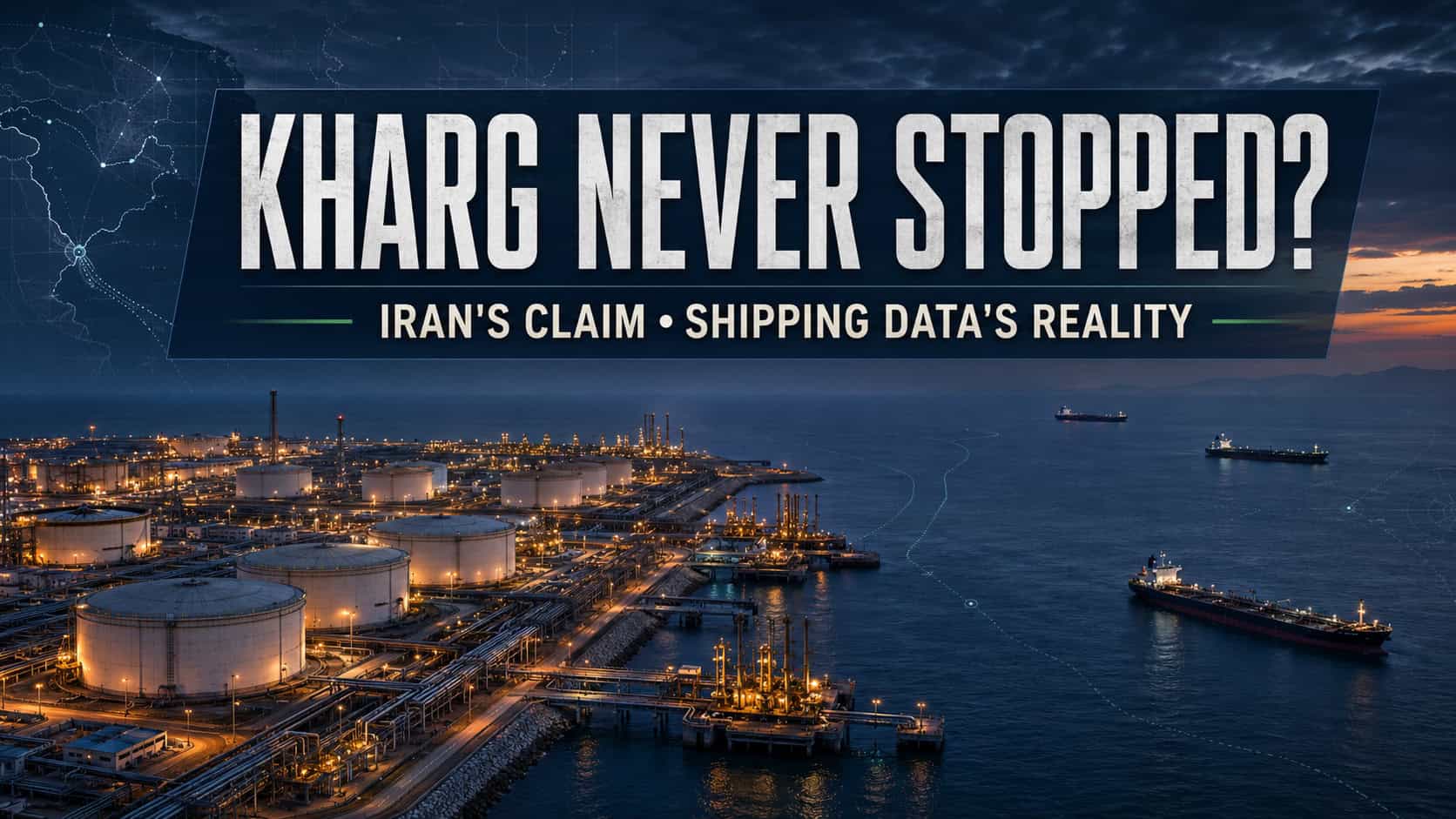
Iran Says Kharg Island Oil Operations Never Stopped—but Shipping Data Tells a Different Story
Iran says its most important oil-export center remains operational despite months of attacks and economic pressure—but new international shipping data raises questions about how much crude is actually moving from the Persian Gulf.
Hamid Bovard, managing director of the National Iranian Oil Company, said conditions on Kharg Island are currently “calm and suitable.” He also claimed Iranian oil workers prevented petroleum operations on the island from stopping, even during repeated American and Israeli attacks.
The remarks are one of Iran’s most recent public assessments of Kharg Island, which traditionally handles approximately 90% of the country’s crude-oil exports.
However, the statement does not necessarily mean tanker loading and exports from Kharg continued without interruption. Independent maritime reporting has previously documented extended periods with little or no visible tanker activity around the terminal.
New shipping data also indicates that oil exports through the Strait of Hormuz remain far below their prewar levels.
Iran Declares Kharg Island Operational
Bovard made the comments during an appearance on the Iranian program “Ecofa,” according to reports published by Iranian media.
“Conditions in Kharg are calm and suitable,” Bovard said, according to an English translation of his remarks.
He credited employees of Iran’s petroleum industry and operational teams with keeping the island’s oil facilities functioning despite multiple attacks.
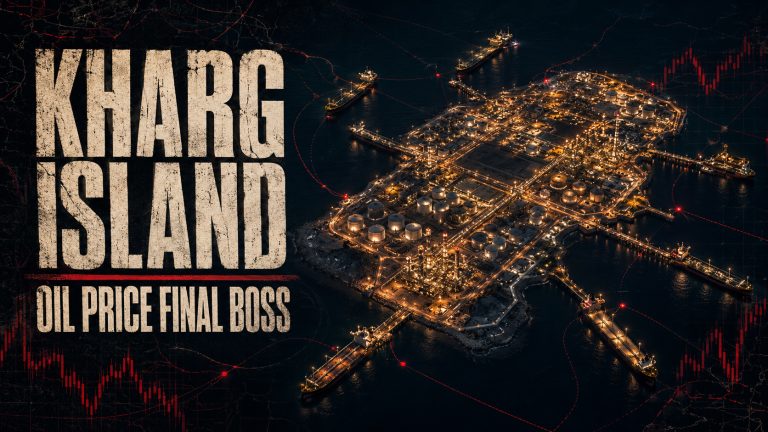
Iran has repeatedly presented Kharg Island’s continued operation as a symbol of national resistance. The island is not simply another Iranian oil facility—it is the primary connection between Iran’s inland oil fields and the international tanker market.
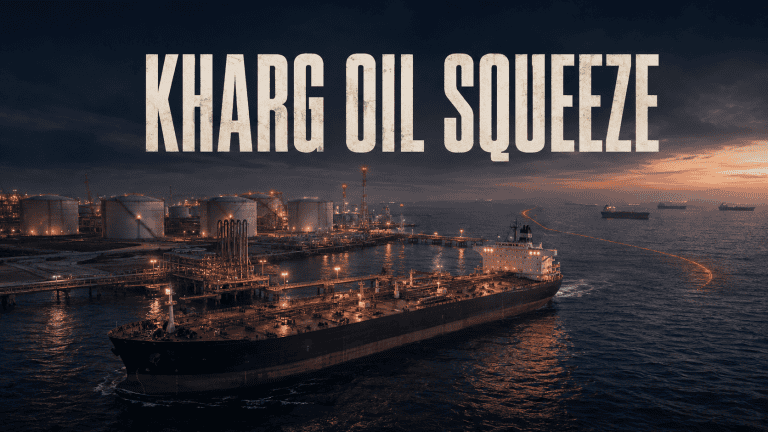
Crude is transported to Kharg by pipeline, stored in large tanks and loaded aboard vessels capable of carrying millions of barrels.
Any prolonged interruption at the terminal could dramatically reduce Iran’s ability to earn revenue from foreign oil sales.
Did Kharg Island’s Oil Exports Really Never Stop?
Iran’s latest statement requires careful interpretation.
Bovard said petroleum activity on Kharg did not stop, but he did not provide current export figures, identify recently loaded vessels or distinguish between production, storage, maintenance and tanker-loading operations.
Those are important differences.
A terminal may remain staffed and technically operational even when few tankers are arriving to collect oil. Crude can also continue flowing into storage while exports are restricted.
Independent maritime intelligence previously showed Kharg Island’s western terminal resumed loading crude in mid-August following a reported 25-day shutdown. The resumption reportedly included a very large crude carrier capable of holding approximately two million barrels.
Other maritime reports documented periods when all three of Kharg’s principal loading berths appeared empty.
Iran may therefore be correct that petroleum personnel continued operating on the island, but the broader claim that its oil-export activity continued without interruption is not independently established.
Shipping Data Challenges Claims of Recovery
New data from maritime analytics company Kpler indicates that Middle Eastern oil exports through the Strait of Hormuz remain significantly below normal.
U.S. Energy Secretary Chris Wright recently suggested approximately 15 million barrels per day were again leaving the Middle East through the strait.
However, Kpler estimates reported by Reuters place average August exports through Hormuz at approximately 2.3 million barrels per day. Even the strongest week reportedly reached only 4.26 million barrels per day.
The difference between those figures is substantial.
Asian crude imports averaged approximately 23.12 million barrels per day during August, compared with 23.36 million in July and a prewar average of approximately 26.91 million barrels per day.
India’s imports from the Middle East were also reported at approximately 1.45 million barrels per day—about half the level recorded before the conflict.
These figures do not measure Kharg Island’s exports alone. Nevertheless, they demonstrate that the shipping route used by vessels leaving Kharg remains severely disrupted.
Hormuz Traffic Shows Only a Limited Improvement
Commercial shipping through the Strait of Hormuz increased slightly on Wednesday.
Kpler data showed 10 commodity vessels passing through the waterway, up from eight the previous day. The total remained below the 10-day moving average of 15 vessels.
The traffic included medium-range fuel tankers, an LPG carrier, a bitumen vessel and other commodity ships.
Some vessels may also be operating with their tracking transponders disabled, making the exact number of movements difficult to determine.
The small increase offers evidence that the strait is not completely closed. It does not show that normal shipping has resumed.
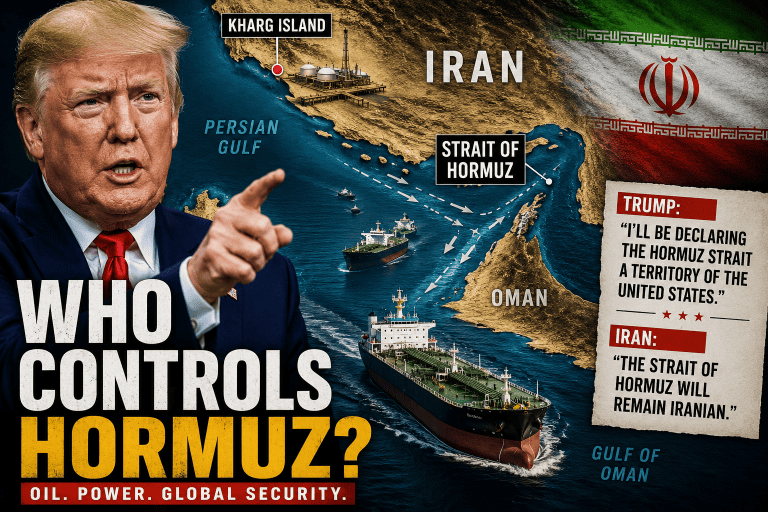
Before the conflict, approximately one-fifth of the world’s oil and liquefied natural gas supplies passed through Hormuz. Continued restrictions therefore affect not only Iran but also other major Persian Gulf exporters.
U.S.–Iran Negotiations Appear to Stall
The latest statements about Kharg Island come as diplomatic efforts between Washington and Tehran appear to be losing momentum.
The White House said no negotiations with Iran are currently taking place, despite mediation efforts led by Qatar and other regional governments.
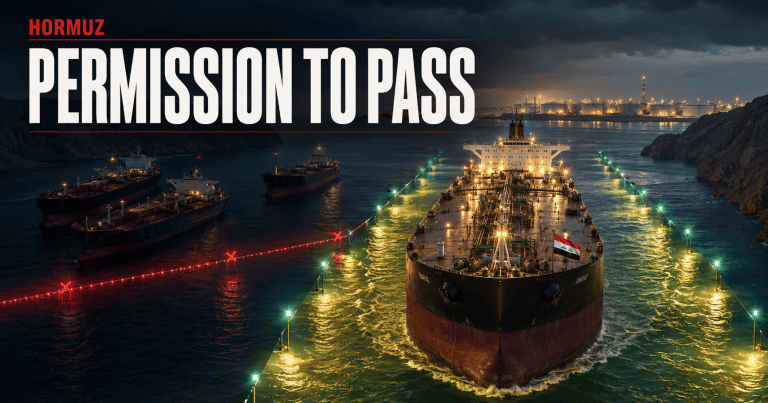
Qatar has reportedly discussed a phased proposal with Iranian officials that could establish a temporary Iranian-Omani shipping corridor through Hormuz. The plan may also include joint mine-clearing operations and a broader agreement governing commercial traffic.
Iran says it remains open to negotiations if the United States complies with conditions connected to the previous ceasefire. Those demands reportedly include sanctions relief, removal of port restrictions and compensation for wartime damage.
Washington’s insistence that no negotiations are underway has reduced optimism that the dispute will be settled quickly.
Oil Prices Rise as Hopes for Talks Fade
Oil prices climbed after the White House denied that negotiations were taking place.
Brent crude rose by more than $1 to approximately $88.92 per barrel during trading reported Thursday. West Texas Intermediate also moved higher, although larger U.S. crude inventories limited its gains.
The market reaction reflects renewed concern about Middle Eastern supplies.
If negotiations remain stalled, sanctions expand or tanker traffic deteriorates again, buyers could face additional pressure. A direct disruption of Kharg Island’s storage or loading infrastructure would create an even greater risk.
Kharg Island Remains Operational—but Isolated
Iran’s statement presents Kharg Island as a functioning oil hub that survived American and Israeli attacks without surrendering its strategic role.
International data presents a more complicated reality.
Personnel may still be operating the terminal. Crude may still be entering storage, and individual tankers may occasionally load cargo. But activity at the facility does not mean Iranian oil exports have returned to normal.
The restricted flow of vessels through Hormuz, depressed Asian imports and uncertainty surrounding negotiations all limit Kharg Island’s ability to perform its most important function: moving Iranian crude into the global market.
For now, Kharg Island appears operational—but increasingly isolated by military risk, shipping restrictions and economic sanctions.
Iran may have kept the machinery running. The harder question is whether it can keep the oil moving.
Sources
- Iranian report on the current conditions at Kharg Island
- The National: Crude loading resumes at Kharg Island
- Reuters: Asian imports challenge claims of recovering Hormuz exports
- Reuters: Shipping traffic rises slightly through Hormuz
- Reuters: Oil rises as the White House denies U.S.–Iran talks
- Reuters: Qatar pursues mediation with Iran