The War Is No Longer About Kharg Island. It’s About Who Controls the Roads Out.
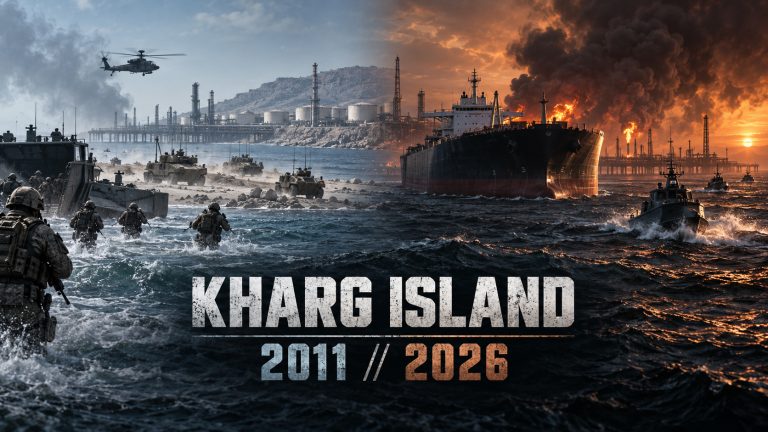
For months, Kharg Island has looked like the obvious target.
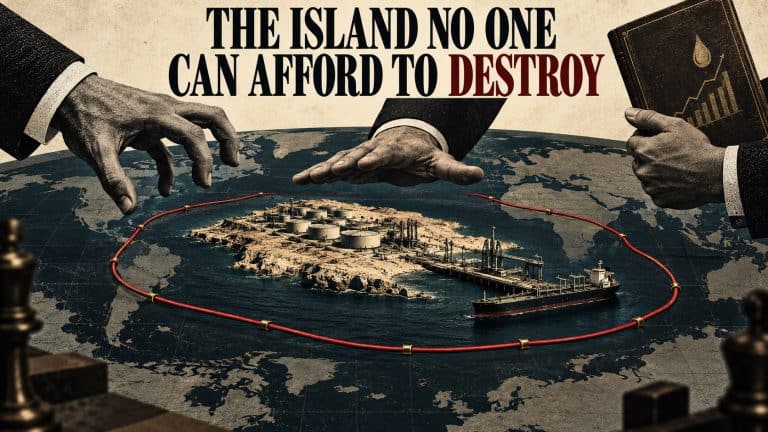
It is Iran’s great oil gateway. Tankers gather there. Pipelines feed it. Export infrastructure covers the island.
If someone wanted to cripple Iranian oil exports, Kharg and the Strait of Hormuz seemed like the place to do it.
But the fighting around the Persian Gulf is beginning to reveal something more complicated.
You do not necessarily have to destroy the port.
You can make the roads out of it unusable.
And that may be where this war is heading.
The Fighting Has Moved to the Ships
The first major change came at sea.
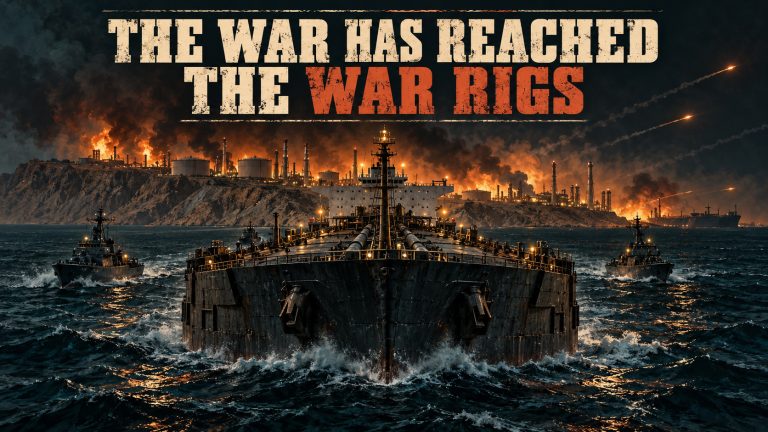
American forces have repeatedly attacked Iranian oil tankers during September.
On September 5, U.S. Central Command said American forces struck three Iranian crude carriers after Iran launched ballistic missiles toward two U.S. Navy warships.
One of those tankers was the Downy, struck off Kharg Island.
Three days later, the United States escalated again.
Five more Iranian oil tankers were struck, including the Derya near Kharg Island.
Iran retaliated by attacking vessels in and around the Strait of Hormuz.
The message from both sides was becoming difficult to miss.
The ships themselves were now part of the battlefield.
That matters enormously for Kharg Island.
Oil sitting in a storage tank has value only if someone can buy it.
To sell it, Iran needs a tanker.
That tanker needs to reach Kharg Island.
It needs to load.
And then it needs a safe route to open water.
Every part of that journey is becoming more dangerous.
Iran Is Trying to Control the Strait Without Simply Closing It
The next phase may already be underway.
On September 14, Iran’s Persian Gulf Strait Authority released an updated list of 77 vessels it accused of violating Iranian rules for traveling through the Strait of Hormuz.
Iran threatened penalties including fines, detention and confiscation.
It also warned companies that provide services to those ships.
This is different from simply announcing that the Strait of Hormuz is closed.
It creates something more complicated.
Iran is attempting to determine who can use the waterway and under what conditions.
That turns geography into leverage.
And the effects are already visible.
Preliminary ship-tracking data reported by Reuters showed commodity-vessel traffic through Hormuz falling into the single digits per day over the weekend.
That is an extraordinary situation for one of the most important energy corridors on Earth.
Diplomacy Is Having Trouble Keeping Up
There was supposed to be another path.
Iran and Gulf states were scheduled to meet in Oman to discuss possible agreements involving the Strait of Hormuz.
That meeting has now been postponed.
No new date has been announced.
That does not mean diplomacy has failed.
But every delay matters when ships are being attacked and commercial traffic is already operating under extraordinary risk.
Shipping companies do not need to believe that Hormuz will remain dangerous forever.
They only need to believe it might be dangerous tomorrow.
Insurance companies make the same calculation.
So do captains.
So do oil traders.
Uncertainty can disrupt a shipping lane almost as effectively as a physical blockade.
Then There Is Yemen
This is where the map becomes uncomfortable.
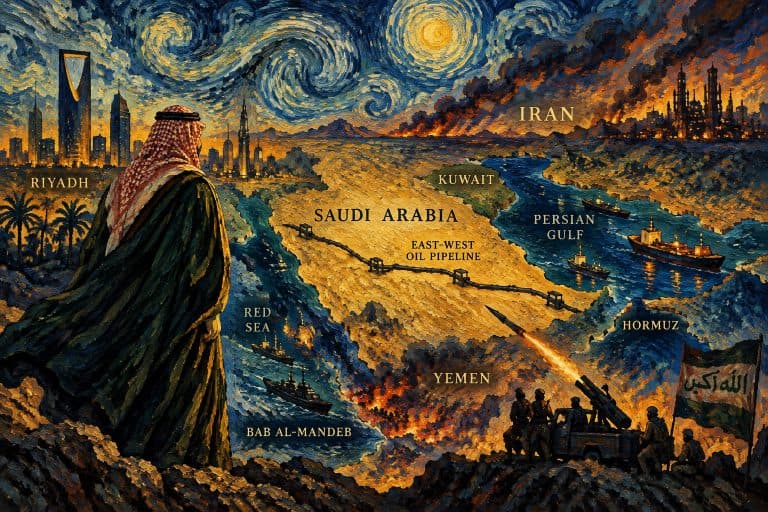
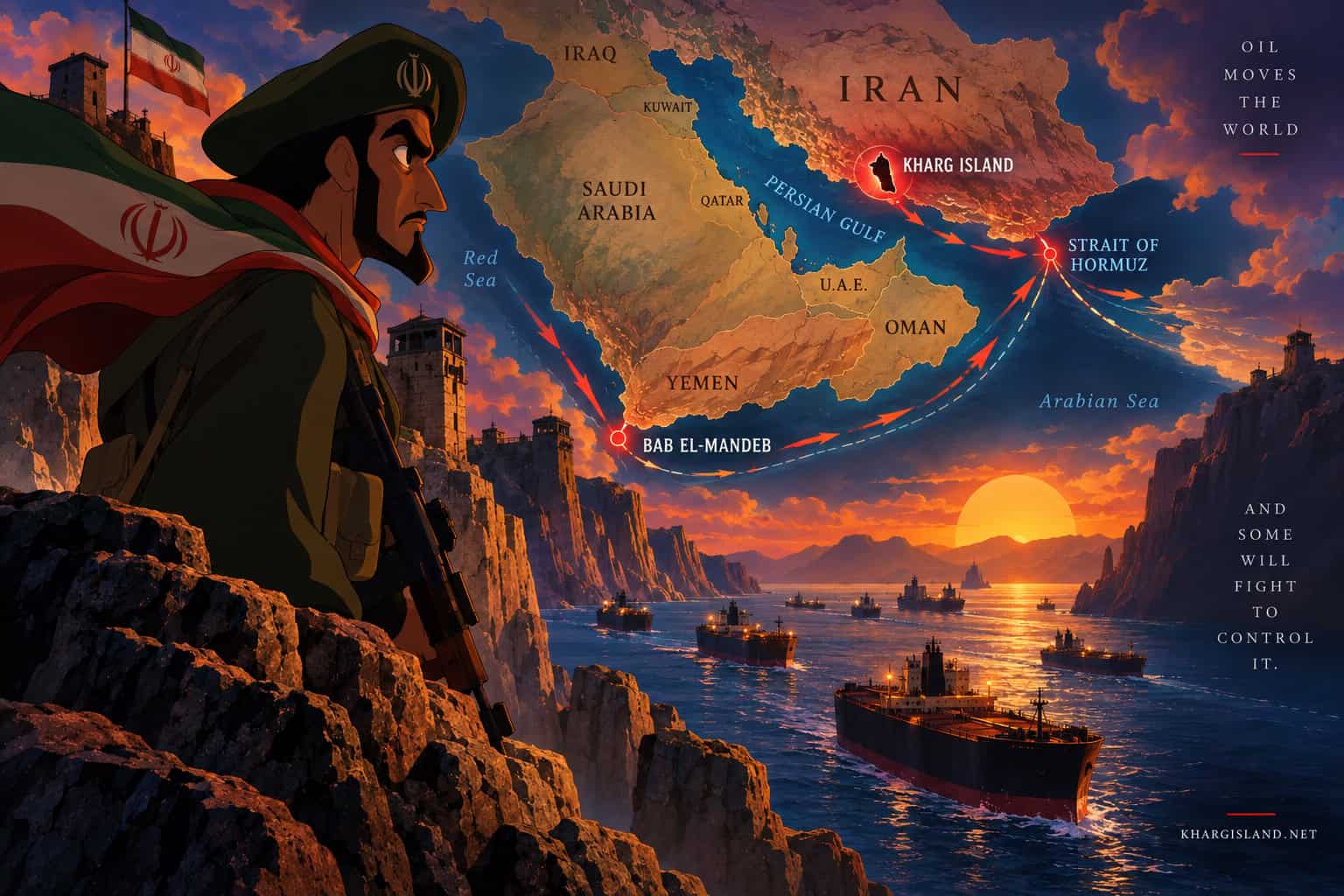
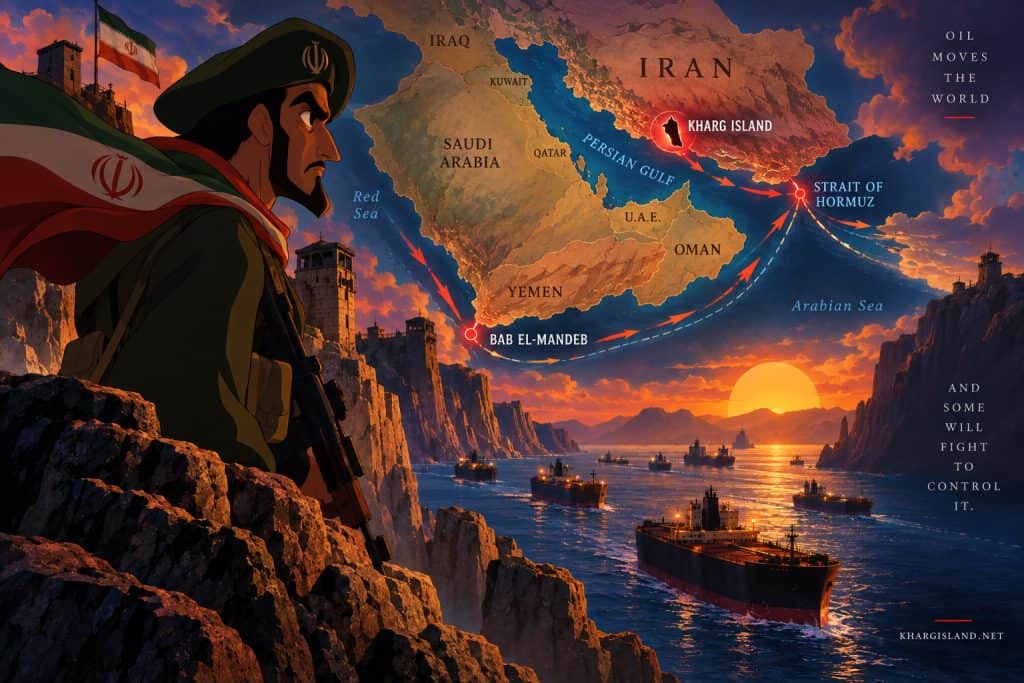
Kharg Island and the Strait of Hormuz sit on the eastern side of the Arabian Peninsula.
Bab el-Mandeb sits on the western side.
Both are vital maritime corridors.
Houthi forces have now seized the Greater and Lesser Hanish islands in the Red Sea, strengthening their position near Bab el-Mandeb.
That means instability is building around two different gateways used by the global energy system.
Look at the region as a map instead of a collection of headlines and the problem becomes obvious.
Hormuz is under pressure.
Bab el-Mandeb is under pressure.
Tankers are being attacked.
Saudi energy infrastructure is being threatened.
Iranian shipping is being targeted.
And negotiations intended to reduce the danger have been postponed.
This is no longer one isolated fight around an Iranian island.
It is becoming a struggle over movement.
Kharg Island Can Survive and Still Be Neutralized
This may be the most important point.
Kharg Island does not have to be destroyed for Iran to lose much of its ability to use it.
Imagine a railroad terminal filled with freight.
The station is intact.
The warehouses are intact.
The cargo is waiting.
But the tracks leaving the station are unusable.
Eventually the terminal stops functioning as a transportation hub.
Kharg Island faces a maritime version of that problem.
Iran can continue pumping crude.
Storage tanks can remain standing.
Loading terminals can remain operational.
But if tankers cannot safely arrive and leave, the value of that infrastructure falls dramatically.
That may explain why the fighting around Kharg Island increasingly appears focused on ships rather than the island itself.
Destroying Kharg would be a massive escalation.
Making Kharg difficult to use accomplishes part of the same economic objective without physically leveling the terminal.
The Map Is Becoming the Story
For years, discussions about the Strait of Hormuz focused on one frightening question:
What happens if Iran closes it?
The current conflict may be producing a different answer.
The Strait does not necessarily have to be formally closed.
Ships simply have to stop trusting it.
A tanker captain does not care about the legal definition of a blockade when missiles are flying.
An insurer does not care whether a shipping lane is technically open if the probability of losing a $100 million vessel becomes unacceptable.
And an oil company cannot export crude from Kharg Island if nobody wants to bring a tanker there.
That is why the next stage of this conflict may not be measured by territory captured or buildings destroyed.
Watch the ships.
Watch the insurance rates.
Watch the number of tankers entering Hormuz.
Watch Bab el-Mandeb.
And above all, watch whether vessels continue sailing toward Kharg Island.
Because Kharg Island may remain standing throughout this war.
The real question is whether anyone can still get there and come back.
-Corey