Battlefield 3 Didn’t Predict the Future. It Understood What Wars Are About.
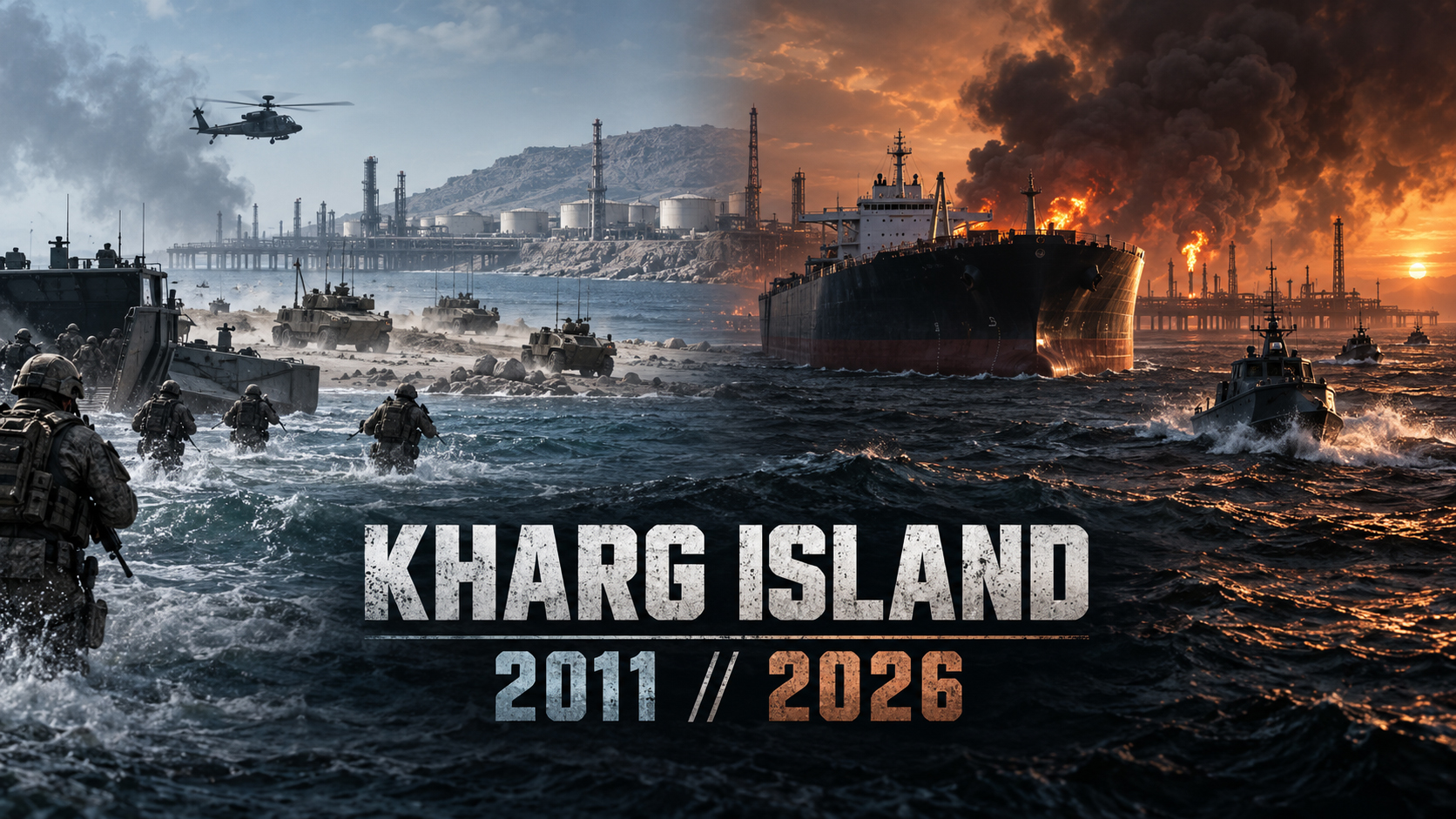
Battlefield 3 introduced millions of players to Kharg Island years before the Iranian oil terminal became a major global flashpoint.
For millions of players, Kharg Island was once merely somewhere to die repeatedly.
It was a digital strip of Iranian territory where helicopters rose from an American aircraft carrier, landing craft rushed toward the beach and tanks fought their way through an industrial landscape. Released in 2011, Battlefield 3 transformed Kharg Island into one of the game’s most memorable multiplayer maps.
Fifteen years later, the name has returned under considerably less entertaining circumstances.
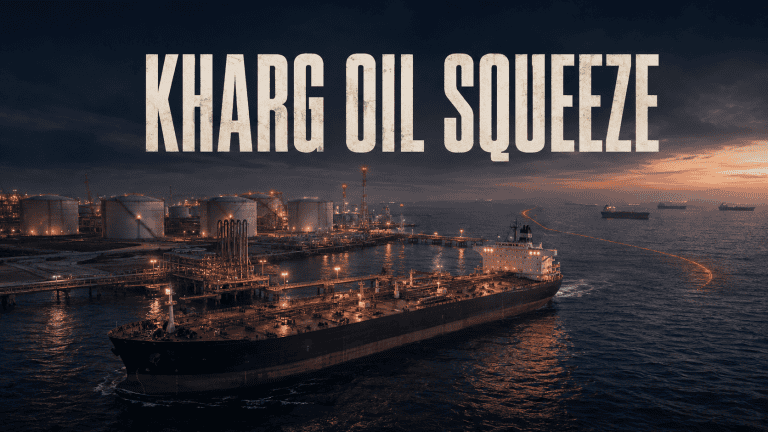
Oil tankers have been attacked near the real Kharg Island. Commercial shipping through the Strait of Hormuz has fallen sharply. According to reporting based on Kpler data, the average number of commodity vessels transiting the strait fell to approximately ten per day over the past ten days—its lowest level since May. On Saturday, only two reportedly made the passage.
There is no respawn timer for their crews.
The irresistible temptation is to say that Battlefield 3 predicted the future. This would be flattering to the game’s writers, exciting to its fans and completely unnecessary.
The game did something more intelligent than prophecy.
It understood geography.
The Map Was Fiction. The Objective Was Not.
The Kharg Island portrayed in Battlefield 3 was not a satellite-perfect recreation of the actual island. It was a fictionalized battlefield designed to accommodate boats, aircraft, armored vehicles and infantry.
But its designers chose the location for a reason.
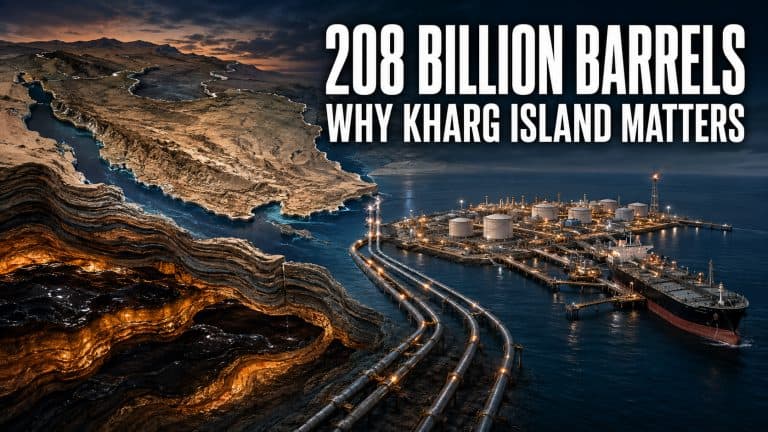
The real Kharg Island is Iran’s principal crude-oil export terminal. Roughly 90 percent of the country’s crude exports have historically passed through it. The island can accommodate enormous tankers and connect Iran’s inland oil fields to the international market.
Kharg is therefore not simply a place where oil happens to be stored. It is the narrow end of a vast economic funnel.
Oil may be extracted hundreds of miles away, but it must eventually reach a buyer. Pipelines, storage tanks, loading terminals and shipping lanes turn black liquid underground into revenue that can be spent above it.
Without that infrastructure, an oil reserve is merely geology.
This is the first lesson that video games occasionally teach better than political speeches: possessing a resource and controlling its movement are two entirely different things.
The World Has Loaded Into the Map
The current crisis has made this distinction impossible to ignore.
Following attacks involving Iranian and American-linked vessels, shipping traffic through the Strait of Hormuz has dropped dramatically. Very large crude carriers—the leviathans upon which the global petroleum trade depends—have become increasingly reluctant or unable to make the journey.
Oil prices have responded because markets possess one virtue that governments often lack: they are incapable of pretending geography does not exist.
A tanker departing Kharg Island must eventually pass through a confined maritime corridor bordered by Iran and Oman. No amount of rhetoric can widen the Strait of Hormuz. No patriotic slogan can extinguish a burning vessel. No televised assurance can compel a civilian captain to sail into a missile engagement.
Governments may describe the waterway as open, controlled, protected or restricted. The meaningful verdict is delivered by the ships themselves.
When the tankers stop moving, the strait is closed in every sense that matters.
Every War Has Objectives
Modern warfare is often presented as an argument between flags, religions or civilizations. These things matter, but they also provide useful decoration for struggles over less poetic commodities.
Fuel must move. Ports must function. Roads must remain open. Electricity must be generated. Cargo must reach its destination.
An army without fuel is an armed pedestrian society.
A petroleum state without export facilities is a wealthy prisoner.
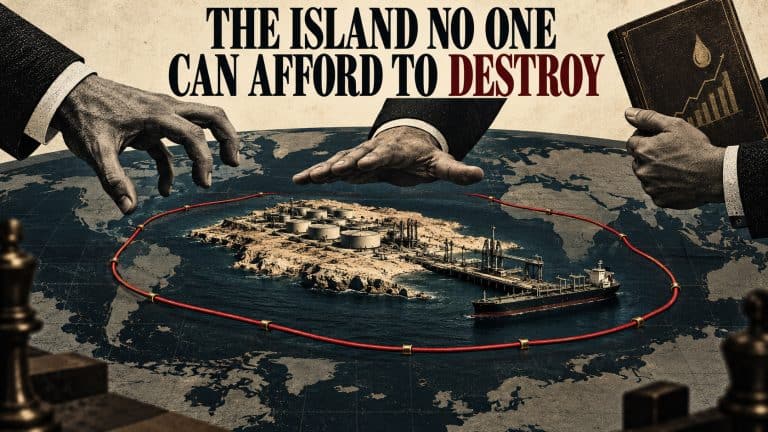
That is why Kharg Island matters. It is not important because a video game placed capture points on it. The game placed capture points on it because the real island already represented something worth capturing, defending or threatening.
Players understood this instinctively. Seize the beach. Secure the road. Hold the high ground. Push toward the industrial facilities. Protect the vehicles transporting firepower to the next objective.
Remove the camouflage netting and military jargon, and the global economy operates through many of the same mechanics.
There are resource nodes, transportation routes, defensive positions and chokepoints. There are also players who begin the match with dramatically better equipment than everyone else and then deliver lectures about the fairness of the rules.
What Battlefield Left Out
The comparison should not be carried too far.
In a video game, destruction is satisfying because it is temporary. The bridge, helicopter and refinery return when the server resets. A player killed on the beach waits several seconds and tries again.
Reality is burdened by consequences.
The people aboard commercial tankers are not background scenery. They are crews who may have little connection to the governments exchanging threats over their heads. A damaged ship can spill oil, destroy livelihoods, interrupt trade and leave human beings dead long after spectators have moved to the next headline.
Nor is war transformed into something clean merely because it is conducted from a distance. A missile launched by someone staring at a screen remains a physical object when it reaches another person’s world.
The resemblance to a video game exists because games imitate the structure of war—not because war has become a game.
That distinction is worth defending.
Battlefield Understood the Assignment
So no, Battlefield 3 did not predict the events of 2026.
It did not foresee these particular attacks, decisions or political personalities. It did not reveal a secret plan concealed inside a multiplayer map.
What it recognized was far older and more dependable than prophecy: nations fight over the systems that allow wealth and power to move.
Kharg Island was strategically important when the game was released. It was important during the Iran-Iraq War, when Iraqi forces repeatedly attacked its facilities. It is important today for precisely the same stubborn geographical reasons.
Technology changes. Administrations change. The vocabulary of justification changes most frequently of all.
The objectives remain remarkably familiar.
A generation of players once assaulted Kharg Island because a game instructed them that the port mattered. Today, the world is receiving the same lesson from oil markets, damaged tankers and an increasingly dangerous stretch of water.
In Battlefield, Kharg Island resets when the match ends.
History has no reset button—and everyone is playing on the same server.