The War Has Reached Your Gas Tank: How Kharg Island Became an Inflation Weapon
The missiles landed thousands of miles from the nearest American gas station. The bill will arrive there anyway.
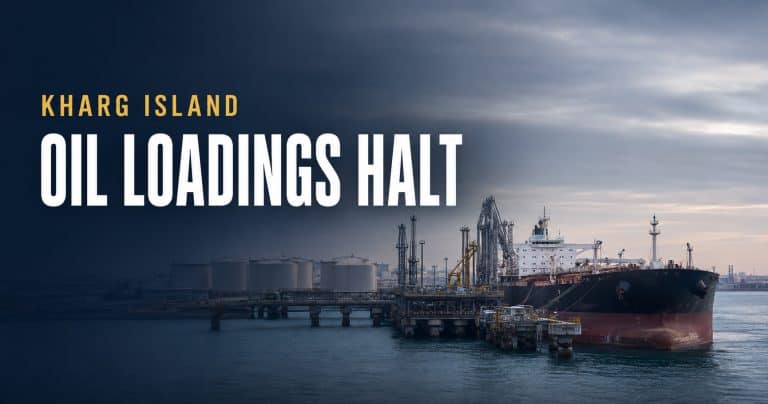
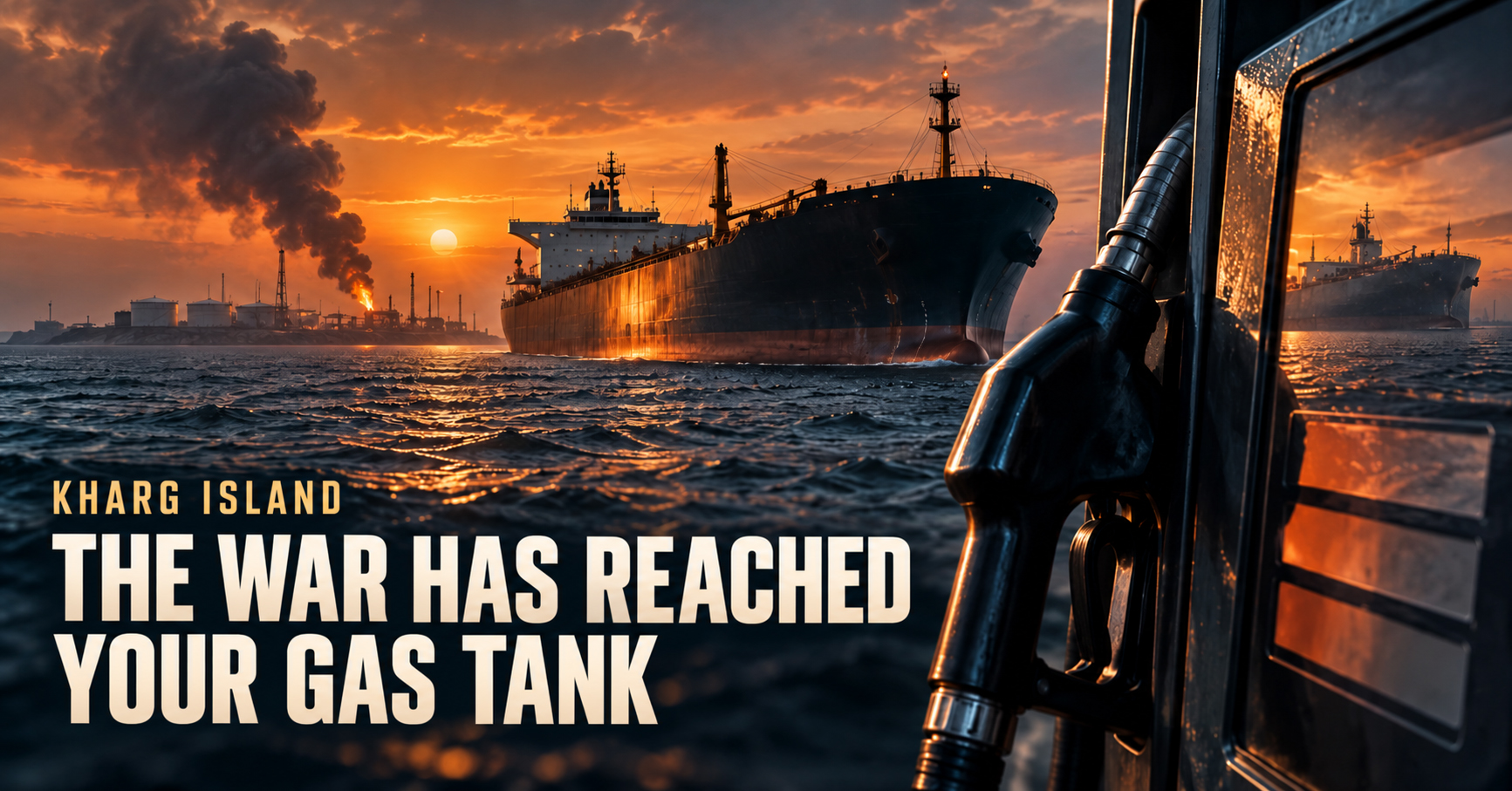
On September 5, U.S. Central Command announced that American forces struck three Iranian crude-oil carriers after Iran’s Islamic Revolutionary Guard Corps launched ballistic missiles toward two U.S. Navy warships. One of those tankers was reportedly disabled near Kharg Island—the small but strategically critical hub at the center of Iran’s oil-export system.
No American personnel were harmed in the Iranian attacks, according to CENTCOM’s official account. But the economic consequences of this escalation will not be confined to warships, tankers or the Persian Gulf.
Modern warfare possesses a remarkably efficient way of invoicing people who never agreed to participate.
The charge appears at the gas pump. It appears in the diesel burned by farmers, truckers and construction crews. It works its way into airline tickets, grocery deliveries, manufactured goods and nearly everything else that must travel before it can be purchased.
Kharg Island has therefore become more than a military target. It has become an inflation weapon.
Three Tankers, One Global Market
It would be easy to dismiss the destruction of three Iranian tankers as another distant exchange in a conflict already overflowing with missiles, threats and retaliatory declarations.
Oil markets do not enjoy that luxury.
Before the latest tanker strikes were announced, renewed fighting between the United States and Iran had already pushed energy prices sharply higher. Brent crude finished the week at $96.28 per barrel, up 7.6%, while West Texas Intermediate climbed nearly 10% to $91.48.
American diesel prices also reached a record national average of $5.85 per gallon, according to Reuters’ September 4 market report.
The tanker strikes occurred afterward, meaning it would be inaccurate to blame those particular attacks for price increases that had already taken place. What they do create is another layer of uncertainty—and uncertainty is one of the most expensive commodities in the oil business.
Markets do not wait for a terminal to be destroyed or a strait to become completely impassable. Traders begin pricing the possibility before the worst event happens.
Shipping companies demand more compensation. Insurers increase war-risk premiums. Tanker operators reconsider routes. Buyers compete for supplies that can reach them without crossing a battlefield.
The consumer eventually pays for every additional mile, every added risk and every sleepless insurance executive.
Why Kharg Island Matters
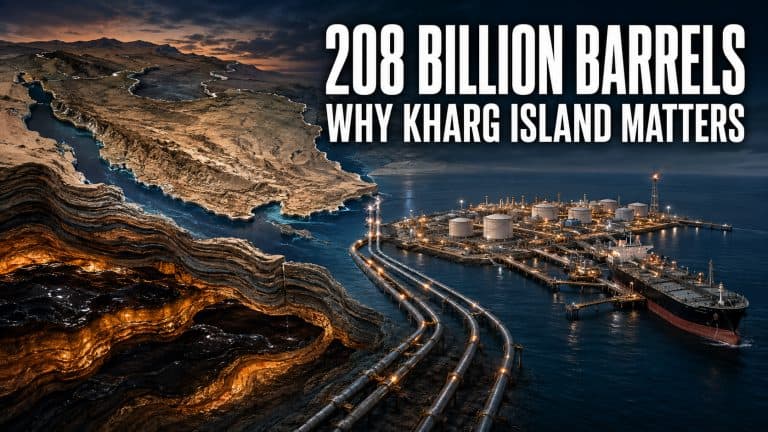
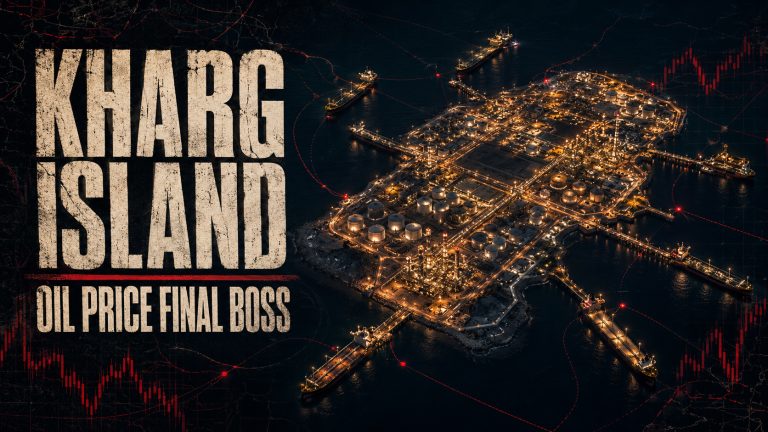
Kharg Island is not imposing. It is a small coral island off Iran’s southern coast, surrounded by machinery, storage tanks, pipelines and loading facilities.
Yet its strategic value is enormous.
For decades, Kharg has served as the principal outlet for Iranian crude exports. Oil produced far inland is carried to the island, stored and loaded aboard tankers bound for foreign markets. Whoever can disrupt Kharg does not need to occupy Iran’s oil fields. That actor can instead interfere with the place where the oil becomes revenue.
This is what makes the island so tempting—and so dangerous.
Destroying an oil field is difficult, messy and potentially temporary. Disabling the infrastructure that allows its oil to reach international buyers can achieve much of the same economic effect without placing an army across an entire country.
The logic is brutal but simple: oil beneath the ground has strategic value. Oil that cannot be shipped has considerably less financial value.
Kharg Island is the valve.
The Strait That Connects the Battlefield to Your Budget
Kharg does not exist in isolation. Tankers departing the island must operate within the wider Persian Gulf shipping system and pass through or near the Strait of Hormuz.
Under ordinary prewar conditions, Hormuz was the most important oil-transit chokepoint on Earth. Approximately 20 million barrels of oil passed through it each day in 2024—roughly 20% of global petroleum-liquids consumption, according to the U.S. Energy Information Administration.
The EIA estimates that flows through the strait averaged only 4.9 million barrels per day during the second quarter of 2026, down from 21.6 million during the final quarter of 2025. The agency has warned that disrupted trade patterns and depleted inventories could keep oil prices elevated until flows normalize.
That is the important point.
The world does not need to lose every barrel passing through Hormuz before the economic pain begins. It merely needs to lose confidence that those barrels will arrive safely, affordably and on schedule.
A tanker does not even have to sink for transportation costs to rise. The credible possibility that it might be attacked can be enough.
War-risk insurance becomes more expensive. Crews require additional compensation. Available tankers become harder to secure. Longer routes consume more fuel and take vessels away from other jobs.
Fear is not measured in barrels, but it is still included in the price.
Diesel Is Where the War Becomes Personal
Gasoline receives most of the political attention because voters see its price displayed in enormous glowing numbers beside the highway.
Diesel is the quieter threat.
Diesel powers the trucks that deliver groceries, the tractors that harvest crops, the equipment that builds roads and the machinery that keeps large sections of the economy operating. When diesel rises, the expense spreads through the supply chain.
A supermarket does not receive a patriotic exemption from transportation costs. Neither does a farmer, a small contractor or a family buying goods that crossed the country in the back of a truck.
The result is a kind of economic conscription.
Citizens who were never asked whether they supported the conflict are drafted through their household budgets. They contribute through higher delivery costs, higher food prices and reduced purchasing power.
No uniform is issued. No declaration is required. The money simply disappears.
Oil Infrastructure Has Become Part of the Battlefield
The September 5 attacks also represent a dangerous evolution in the conflict.
The United States says the tanker strikes were retaliation for Iranian missile attacks on American warships. Iran, meanwhile, has warned that further attacks will receive faster and more painful responses. Reuters reported that Tehran is also seeking to impose a restricted maritime zone near Hormuz.
Once commercial energy infrastructure becomes an accepted target, escalation acquires its own momentum.
One tanker becomes three. Three tankers become a terminal. A terminal becomes a refinery, pipeline or foreign-flagged vessel suspected of assisting the enemy.
Each side can describe its next attack as proportional, defensive or unavoidable. The oil market will be less interested in the adjective than in the explosion.
The greatest economic danger may not be one spectacular attack on Kharg Island. It may be the normalization of smaller attacks throughout the region—enough to keep ships, insurers and traders permanently nervous.
A single crisis can be absorbed. Chronic instability becomes a surcharge on the entire world economy.
The Battlefield Is Larger Than the Map
When most Americans look at Kharg Island, they see a remote place in an unfamiliar sea. That geographical distance creates a comforting illusion: whatever happens there is happening somewhere else.
But the modern economy has abolished “somewhere else.”
A tanker disabled near Iran can influence the price of diesel in Nebraska. An insurance decision in London can alter shipping costs in Singapore. A threat issued in Tehran can move oil futures in New York before the speaker has left the podium.
This is the strange intimacy of global energy markets. Kharg Island may be eight miles long, but its economic shadow can cross continents.
The missiles landed in the Persian Gulf.
The invoice is global.