Iran’s Proxy War Is Closing In on Saudi Arabia’s Oil Lifelines
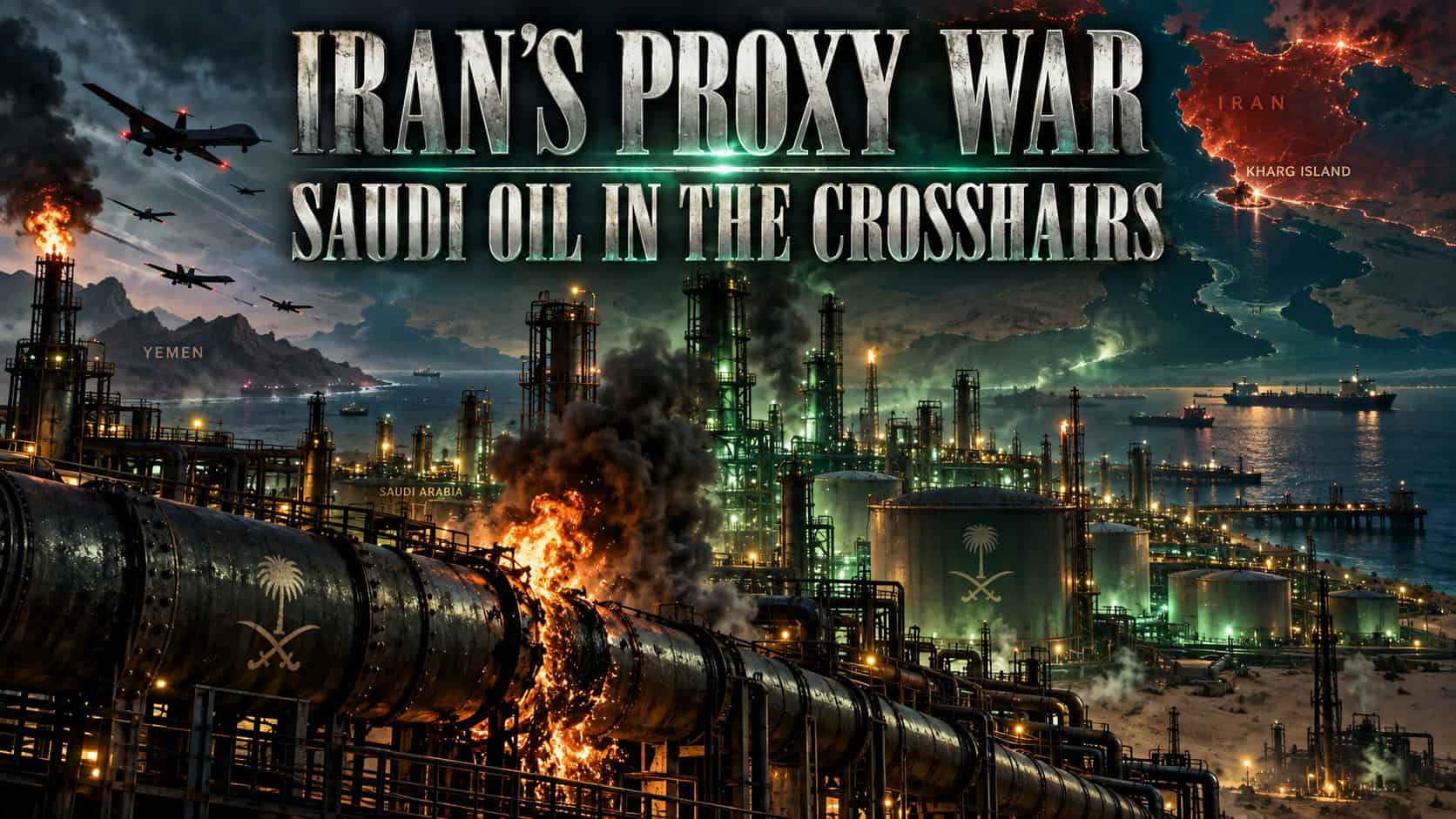
Saudi Arabia’s oil network is being pressured from Iraq, Yemen and the waterways surrounding the Arabian Peninsula.
Saudi Arabia is being pulled into the expanding regional war, but Iran does not need to attack the kingdom from its own territory.
Tehran’s allies can do it instead.
Iran-aligned armed groups are now pressuring Saudi Arabia from two directions. Houthi forces in Yemen are attacking from the south and threatening shipping through the Red Sea. Militias operating from Iraq have been linked to an attack on the kingdom’s most important oil pipeline.
Together, these attacks are placing Saudi oil infrastructure inside an increasingly dangerous circle.
This is the strategy Iran has spent years building: surround its rivals with armed groups capable of launching drones and missiles while Tehran keeps a degree of distance from the operation.
Iran may not have to fire the weapon itself. It only needs the weapon to reach its target.
Saudi Arabia’s Oil Escape Route Has Been Hit
The East-West Pipeline is one of Saudi Arabia’s most valuable pieces of energy infrastructure.
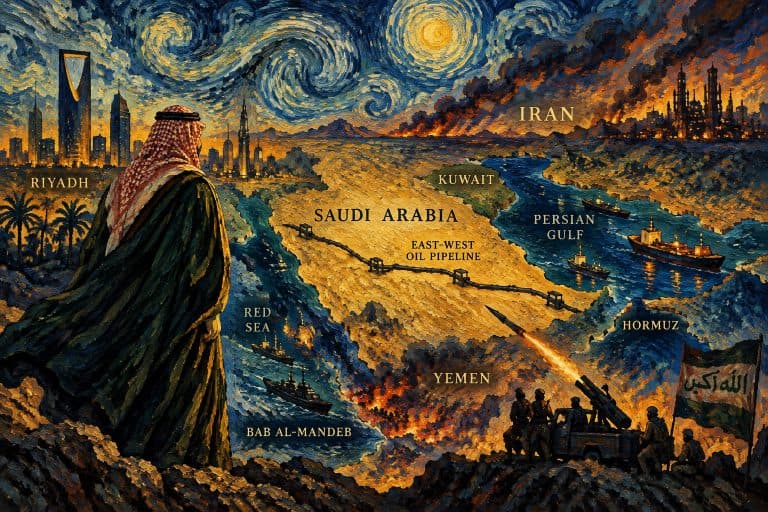
It carries oil from production fields in the east to the Red Sea port of Yanbu. That allows Saudi Arabia to export crude without sending every tanker through the Strait of Hormuz.
That alternative route has become even more important as fighting around Iran and the Persian Gulf threatens shipping near Hormuz.
But the pipeline has now become a target.
An attack reportedly conducted by Iran-aligned militias operating from Iraq damaged the East-West Pipeline and could leave much of it shut down for weeks. Regional officials told the Associated Press that the disruption could remove several million barrels of oil per day from the market while repairs are made.
The importance of that attack is difficult to overstate.
Saudi Arabia built the pipeline as protection against trouble in the Persian Gulf. If Hormuz became too dangerous, oil could move west and leave through the Red Sea.
Now that escape route is also under attack.
The Houthis Are Pressuring the Other End
While the pipeline is being threatened from the north, Iran-backed Houthi forces are increasing pressure from Yemen.
The Houthis have attacked Saudi infrastructure and shipping. They have also expanded their control along Yemen’s Red Sea coast and seized positions near the Bab el-Mandeb Strait.
Bab el-Mandeb is the narrow passage connecting the Red Sea with the Gulf of Aden and the wider Indian Ocean. Oil leaving Saudi Arabia through Yanbu must eventually travel through this corridor to reach many Asian markets.
That means Saudi Arabia faces danger at both ends of its backup export system.
The pipeline carrying oil west has been damaged. The maritime route carrying that oil south is under pressure from the Houthis.
This does not look like a collection of unrelated attacks. It resembles a coordinated regional pressure campaign, even when direct operational control by Tehran cannot be independently proven.
A Drone Near Mecca Raises the Stakes
On September 16, Saudi Arabia announced that its air defenses had intercepted a Houthi drone south of Mecca before it entered restricted airspace.
Saudi officials called the protection of Mecca and Islam’s other holy sites a “red line.”
The Houthis denied targeting Mecca or posing a threat to religious sites. The group has, however, claimed other recent attacks against Saudi Arabia, including strikes against military targets.
Whether Mecca itself was the intended target remains disputed. The broader warning is not.
Houthi drones are flying deep enough into Saudi territory to place the kingdom on nationwide alert.
Every successful interception still forces Saudi Arabia to spend money, move defensive systems and decide which targets receive the greatest protection. Oil fields, pipelines, refineries, ports, cities and holy sites cannot all be defended equally at every moment.
That is one of the advantages of proxy warfare. A relatively inexpensive drone can force an opponent to activate defenses costing far more.
Iran Can Apply Pressure Without Claiming Responsibility
Iran’s relationships with groups such as the Houthis are real, but they are not always simple chains of command.
These organizations have their own leaders, local interests and military objectives. Calling them Iranian puppets can hide that independence.
But calling them entirely separate from Tehran would ignore years of weapons transfers, training, financing and political support.
Iran’s network gives it strategic reach beyond its borders. It can pressure Israel through Hezbollah, threaten American forces through militias in Iraq and Syria, and challenge Saudi Arabia through forces positioned in Yemen and Iraq.
The ambiguity is useful.
Tehran can benefit when its allies strike a rival while denying that it ordered the attack. That uncertainty makes retaliation more difficult. Saudi Arabia must decide whether to strike the group that launched the weapon, the territory from which it was fired or Iran itself.
Each choice carries the risk of a larger war.
Kharg Island Is Part of the Same Oil Battlefield
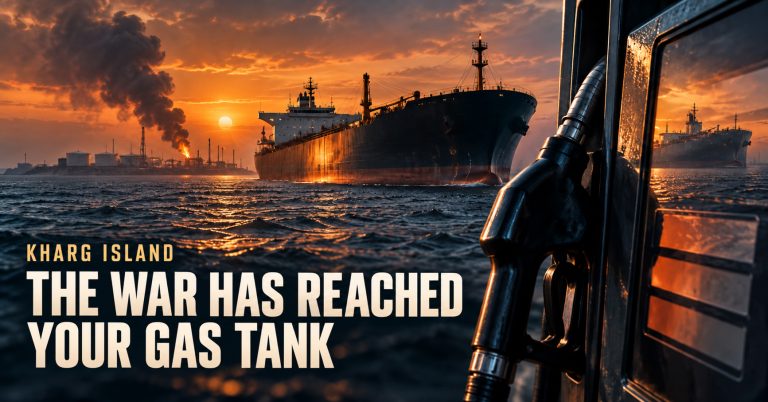
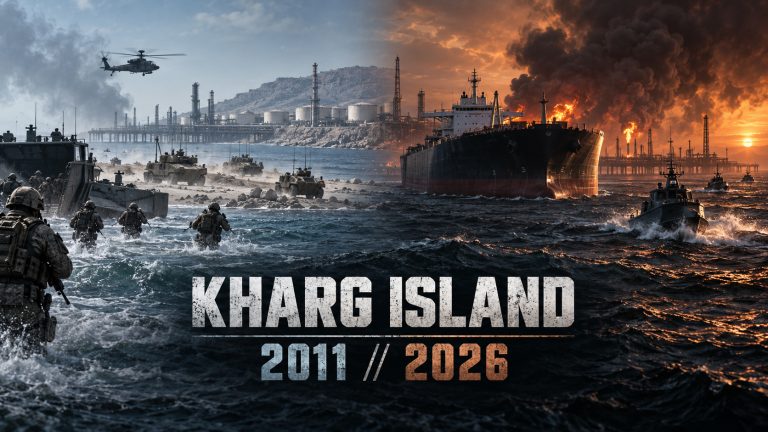
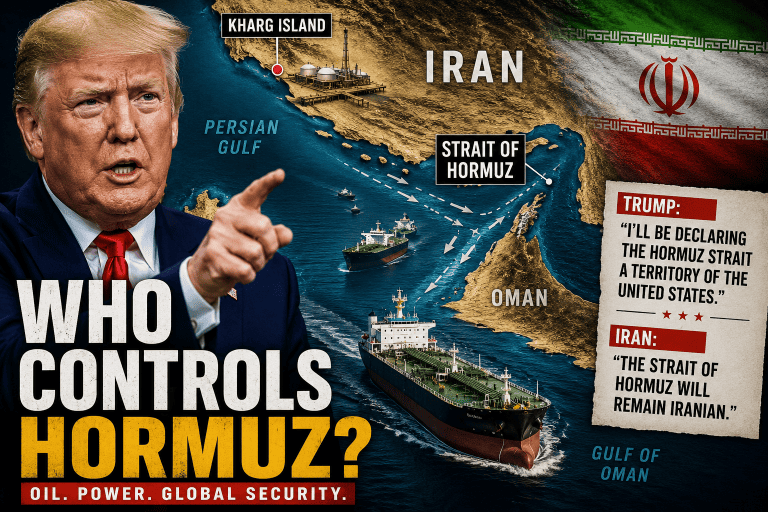
Kharg Island remains central to this struggle because it is the heart of Iran’s own oil export system.
Iran depends heavily on Kharg. Saudi Arabia depends on a much larger network of fields, pipelines, processing facilities and ports.
Both countries understand that oil infrastructure is no longer separate from the battlefield. It is the battlefield.
If Iran’s enemies threaten tankers or facilities near Kharg Island, Tehran has several ways to respond. It can strike directly, threaten the Strait of Hormuz or allow allied groups elsewhere in the region to increase pressure on Saudi Arabia.
The result is a dangerous form of balance.
Iranian oil exports face pressure in the Persian Gulf. Saudi exports face attacks on the East-West Pipeline and danger along the Red Sea route. Tankers must navigate between military operations, damaged infrastructure and two of the world’s most important maritime chokepoints.
No country needs to destroy an entire oil industry to create a global crisis. It only needs to make insurers, shipping companies and energy traders believe that the next voyage may not be safe.
Saudi Arabia Faces a Difficult Choice
Saudi Arabia can respond with a larger military campaign in Yemen, but that could bring even more Houthi attacks against refineries, pipelines and cities.
It can retaliate against militias operating from Iraq, but doing so could widen the conflict and strain relations with Baghdad.
It can seek direct or indirect negotiations with Iran, but diplomacy conducted under attack can look like submission.
Crown Prince Mohammed bin Salman has already sought support from Egypt as the kingdom attempts to secure the Red Sea and protect its oil trade. Yet Saudi Arabia has so far received political support more readily than direct military assistance.
The kingdom is learning the same lesson faced by other regional powers: Iran’s network is easier to provoke than it is to eliminate.
The War Is Becoming a Contest Over Routes
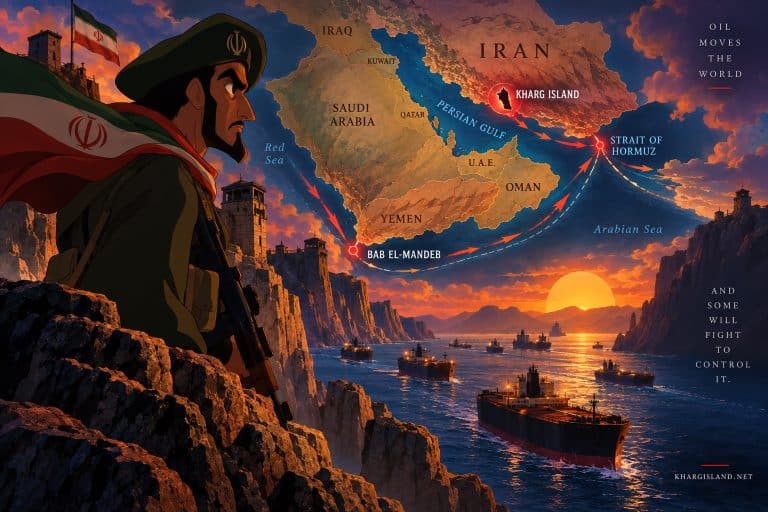
The most important map in the Middle East may no longer be a map of national borders.
It is a map of pipelines, ports and narrow waterways.
Kharg Island anchors Iran’s oil trade. The Strait of Hormuz controls access to the Persian Gulf. Saudi Arabia’s East-West Pipeline offers a route around Hormuz. Yanbu opens onto the Red Sea. Bab el-Mandeb controls the southern exit.
Iran and its aligned groups now exert pressure across several points on that map.
Saudi Arabia may possess more oil infrastructure, greater production capacity and some of the world’s most advanced weapons. But pipelines do not move, ports cannot hide and tankers are visible for hundreds of miles.
Iran’s proxy network was built for this kind of contest.
Saudi Arabia is not simply facing attacks from Yemen or Iraq. It is facing a regional system designed to make every oil route vulnerable at the same time.
And when the routes begin to close, the consequences do not remain in the Middle East.
They arrive everywhere—in the price of fuel, the cost of shipping and the fear running through global markets.
Reporting referenced in this analysis includes current coverage from Reuters and the Associated Press. Iran’s direct command of individual attacks has not been independently established.