China Loves Iran, Right Up Until Iran Interrupts the Oil
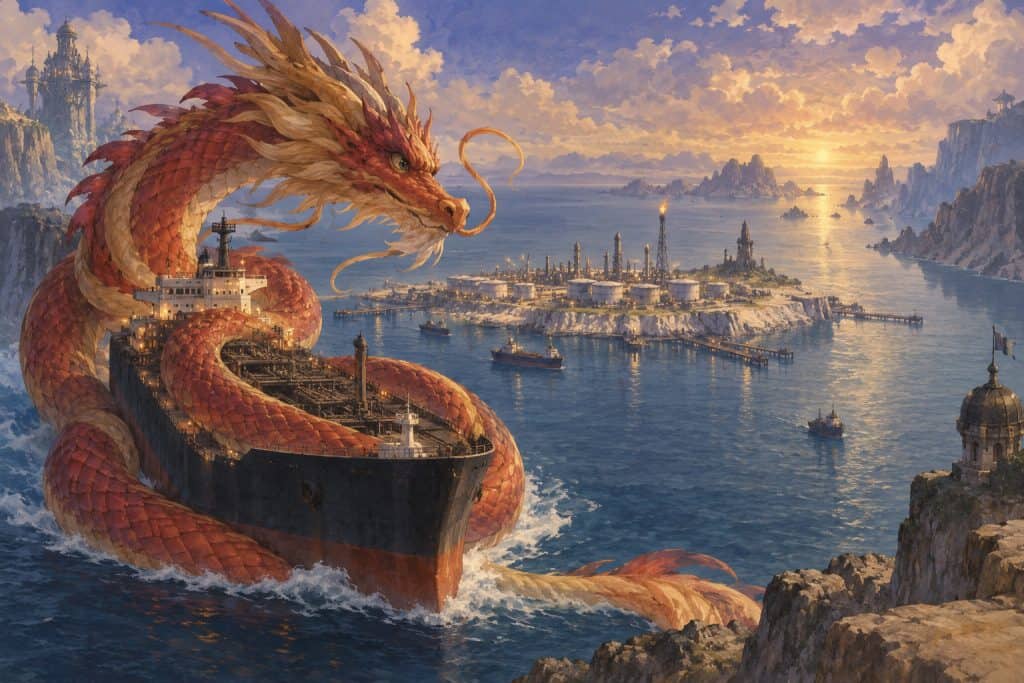
There is something wonderfully clarifying about an oil tanker.
Governments may speak of friendship, sovereignty, resistance, multipolarity and the sacred brotherhood of nations. An oil tanker has no patience for any of this.
It either sails or it does not.
And China’s problem with Iran can increasingly be reduced to that rather inelegant fact.
Beijing has spent years presenting its relationship with Tehran as part of a larger alternative to American power. Iran gets diplomatic protection, investment and, most importantly, a customer willing to purchase enormous quantities of its sanctioned crude.
China gets discounted oil.
Everyone gets to make speeches about cooperation.
Then came the war.
And suddenly the poetry of international friendship encountered the prose of an energy bill.
China Supports Iran. China Also Supports Oil.
Iranian Foreign Minister Abbas Araghchi arrived in Beijing this week for talks with Chinese Foreign Minister Wang Yi.
China reaffirmed its support for Iran.
This was unsurprising.
What was considerably more interesting was what came next.
Wang called for the Strait of Hormuz to reopen as soon as possible.
One can hardly blame him.
China may enjoy challenging American influence in the Middle East, but it has considerably less enthusiasm for challenging the laws of supply and demand.
The Strait of Hormuz is one of the most important energy corridors on Earth.
China depends heavily on the oil that passes through it.
Iran therefore presents Beijing with an increasingly awkward contradiction.
China wants Iran strong enough to resist American pressure.
It does not necessarily want Iran strong enough to interfere with China’s oil supply.
There is a difference.
Then There Is Kharg Island
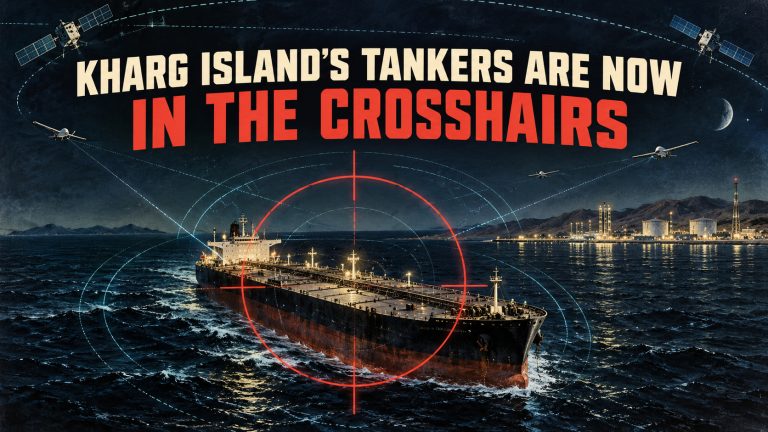
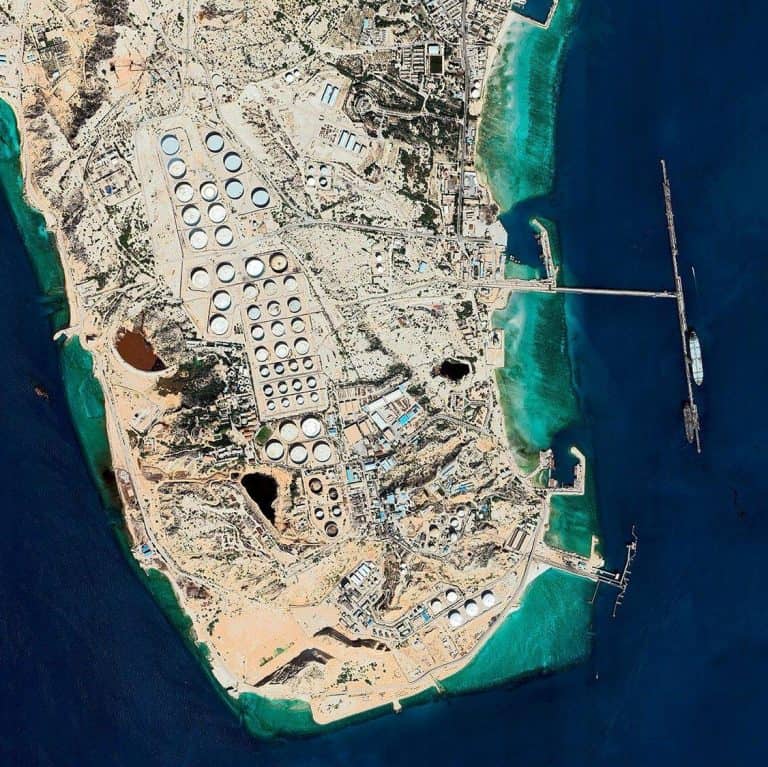
To understand the absurdity of the situation, look at Kharg Island.
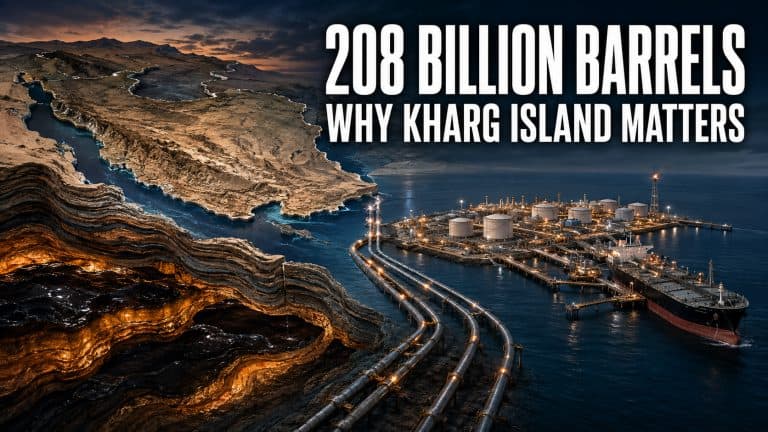
This small island in the Persian Gulf handles roughly 90 percent of Iran’s crude oil exports.
Before the war, approximately 80 percent of the shipments leaving Kharg were reportedly destined for China.
Consider that for a moment.
Iran presents itself as a state resisting Western economic pressure.
China presents itself as Iran’s strategic partner.
Yet the relationship ultimately depends upon an extraordinarily old-fashioned arrangement:
Iran has oil.
China wants oil.
Kharg Island is where much of the transaction begins.
Strip away the flags, communiqués and diplomatic choreography and the relationship becomes remarkably easy to understand.
It is a business arrangement wearing geopolitical clothing.
The Numbers Are Less Diplomatic
War has not been kind to that arrangement.
Chinese imports of Iranian crude moving through Hormuz averaged roughly 530,000 barrels per day during July and August, according to figures reported by The National.
That was approximately 48 percent below prewar levels.
At their October 2024 peak, Chinese imports of Iranian crude had approached 1.9 million barrels per day.
Wars have a vulgar habit of exposing what governments actually value.
And China values energy security.
This does not mean Beijing is preparing to abandon Tehran.
Quite the opposite.
Iran remains useful to China.
It provides discounted crude. It complicates American strategy. It occupies an important position between the Persian Gulf, Central Asia and the wider Middle East.
But usefulness is not friendship.
Nations do not have friendships in the sentimental sense.
They have interests.
And China’s interests are currently floating through the Strait of Hormuz in very large steel ships.
Beijing’s Other Friends
There is another inconvenience for anyone tempted to imagine China and Iran as ideological brothers.
China is also deeply involved with Saudi Arabia.
And the United Arab Emirates.
And Iraq.
And practically every other major energy producer willing to sell it oil.
China helped broker the restoration of diplomatic relations between Iran and Saudi Arabia in 2023.
That achievement was presented as evidence of China’s growing diplomatic influence in the Middle East.
Now Beijing gets to experience the less glamorous part of influence.
Keeping everyone from strangling everyone else’s trade routes.
Saudi Arabia has reportedly asked China to use its influence with Iran concerning Yemen’s Houthis.
China, in turn, has pressed Tehran.
Again, the explanation requires remarkably little geopolitical mysticism.
China does not want another shipping crisis in the Red Sea while Hormuz is already under pressure.
One disrupted maritime artery is unfortunate.
Two begins to resemble an economic problem.
Iran Has Leverage Too
It would be a mistake, however, to imagine China holding all the cards.
Iran understands perfectly well that China needs energy.
It also knows Beijing has few ideological objections to buying sanctioned crude at an attractive price.
That gives Tehran leverage.
But leverage has an unfortunate characteristic.
It becomes considerably less impressive when using it harms your customer.
Iran needs Chinese purchases.
China needs reliable Iranian exports.
Neither side benefits from tankers sitting idle while Kharg Island’s enormous export infrastructure operates below its potential.
This is not an alliance built upon affection.
It is mutual dependence.
And mutual dependence is considerably more interesting because both participants occasionally discover who depends upon whom more.
The Dragon Has an Oil Habit
China’s predicament therefore deserves attention.
Beijing wants to present itself as the responsible alternative to American power.
It wants influence in Tehran.
It wants excellent relations with Riyadh.
It wants access to Iranian oil.
It wants access to Saudi oil.
It wants Hormuz open.
It wants the Red Sea open.
It wants regional stability.
And it would prefer to achieve all of this without becoming responsible for solving the political contradictions that made the instability possible.
It is an impressive shopping list.
But history has a habit of charging for delivery.
The deeper China becomes involved in Middle Eastern energy, the harder it becomes for Beijing to behave merely as an observer.
Eventually, economic influence produces political responsibility.
China may discover that purchasing enormous quantities of Middle Eastern oil is the easy part.
Keeping that oil moving is harder.
Watch Kharg
That is why Kharg Island deserves attention far beyond Iran.
Its storage tanks and loading terminals form one of the physical connections between Chinese economic power and Iranian survival.
When Kharg operates normally, Iran earns money and China receives crude.
When Kharg slows, both countries feel it.
The relationship between China and Iran can therefore be measured not only in diplomatic meetings or carefully worded statements.
It can be measured in barrels.
And barrels are wonderfully immune to propaganda.
China can praise Iran.
Iran can praise China.
Both governments can issue statements about strategic cooperation and a changing world order.
But somewhere off Kharg Island sits a tanker waiting for crude.
And unlike diplomats, the tanker cannot be persuaded by rhetoric.
It needs oil.