Hormuz Oil Surge Fades Within 24 Hours as Kharg Export Picture Grows Murkier
A reported surge in oil shipments through the Strait of Hormuz has been followed by another sharp decline in vessel traffic, underscoring just how unstable—and difficult to verify—the region’s energy flows have become.
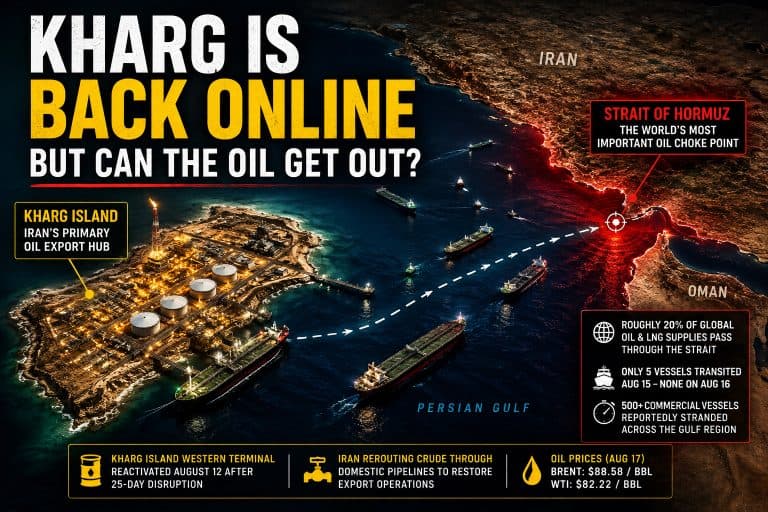
The conflicting numbers are particularly important for Kharg Island, Iran’s primary crude-export terminal. Even if the island’s loading facilities remain operational, Iran still needs tankers to move its oil through an increasingly dangerous and unpredictable maritime corridor.
Seventeen Million Barrels Reportedly Moved Monday
U.S. Energy Secretary Chris Wright said approximately 17 million barrels of oil passed through the Strait of Hormuz on Monday, September 1.
If accurate, that would represent the largest single-day volume to transit the strait since shipping was severely disrupted by the Iran conflict.
However, the apparent recovery may have been extremely short-lived.
Preliminary Kpler tracking data cited by Reuters showed only four commodity vessels passing through the strait on Tuesday. That was down from approximately 10 on Monday and well below the recent 10-day average of roughly 13 vessels.
Only one of Tuesday’s tracked vessels entered the Persian Gulf, while three exited.
The numbers remain preliminary and may be revised, but they reveal a major gap between the announcement of a dramatic oil-flow recovery and the limited number of vessels visible through conventional tracking systems.
Tankers Are Becoming Harder to Track
The discrepancy does not necessarily mean either figure is false.
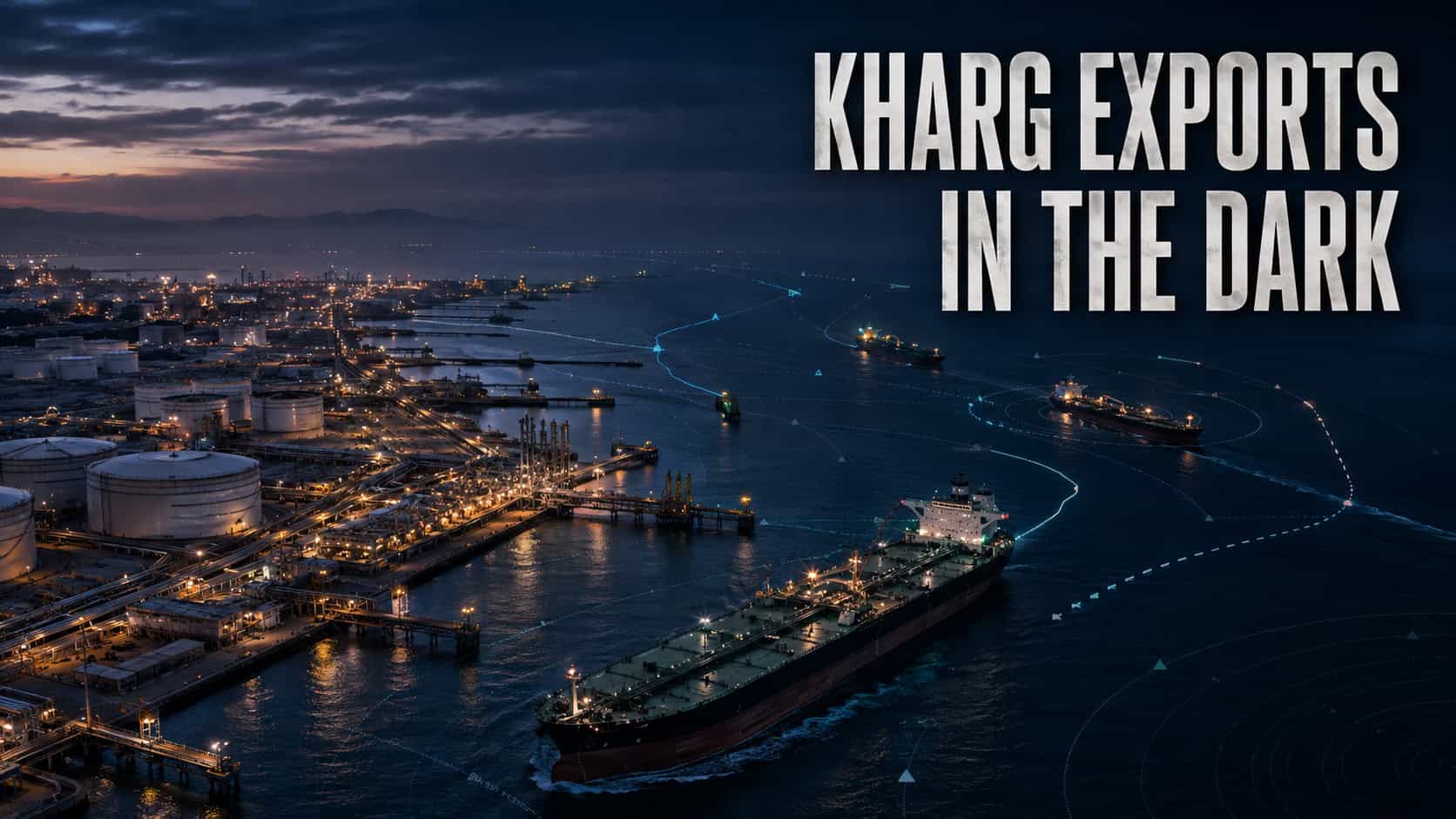
Tankers operating around Iran frequently disable or manipulate their Automatic Identification System signals. This practice—commonly called “going dark”—makes it difficult for commercial tracking services to determine exactly how many ships are moving, where they loaded or how much oil they are carrying.
Consequently, 17 million barrels could have moved aboard a relatively small number of very large tankers. Other vessels may also have crossed without transmitting reliable location data.
But the publicly available information does not establish how much of Monday’s reported volume originated at Kharg Island.
That distinction matters.
Kharg handles the overwhelming majority of Iran’s seaborne crude exports, but the Strait of Hormuz also carries oil produced by Iraq, Kuwait, Qatar, Saudi Arabia and the United Arab Emirates. A large total passing through Hormuz does not automatically mean Iranian exports have recovered.
Iran Says Kharg Never Stopped Working
Hamid Bovard, managing director of the National Iranian Oil Company, recently said conditions at Kharg were “calm and suitable.”
According to Iranian reporting, Bovard also claimed that oil-industry personnel had prevented operations from stopping despite previous attacks and continuing military pressure.
That statement indicates the terminal itself may remain capable of storing and loading crude.
Its ability to generate revenue, however, depends on whether tankers can safely approach the island, take on cargo and leave the Persian Gulf without being intercepted or attacked.
In other words, an operational terminal is not necessarily an exporting terminal.
Iraq’s Recovery Complicates the Picture
Another development makes the source of the reported oil surge even less clear.
Iraq increased its exports substantially during August after receiving Iranian clearance for tankers to navigate the Strait of Hormuz. Industry data cited by Reuters placed Iraqi exports at approximately 2.34 million barrels per day, compared with around 1.35 million barrels per day in July.
Those volumes remain below Iraq’s prewar exports, but they show that a significant share of the oil now moving through Hormuz may be Iraqi rather than Iranian.
Iraqi crude has also reportedly been sold at steep discounts, attracting buyers in China and India willing to accept the additional transportation and insurance risks.
This creates an unusual situation in which Iran may retain enough influence over the strait to determine which countries can export oil—even while Kharg Island faces restrictions on moving Iran’s own crude.
Oil Prices Signal That the Crisis Is Not Over
Markets are not treating Monday’s reported surge as proof that normal shipping has returned.
Brent crude climbed above $96 per barrel during early Asian trading Wednesday as renewed military exchanges raised fears of another major supply disruption.
Before the conflict, close to one-fifth of globally traded oil passed through the Strait of Hormuz. Iranian reporting indicates total regional exports remain approximately 11 million to 12 million barrels per day below their prewar level.
The market’s reaction suggests traders remain more concerned about the next disruption than reassured by one unusually active day.
What This Means for Kharg Island
The latest data paints a more complicated picture than either “Kharg is shut down” or “Iranian exports have recovered.”
Kharg Island may remain physically operational, but the shipping system surrounding it is fragmented, selectively controlled and increasingly concealed from public tracking.
Monday’s reported 17-million-barrel movement demonstrates that large volumes can still escape the Persian Gulf under the right conditions. Tuesday’s sharp decline demonstrates that those conditions can disappear almost immediately.
For Kharg Island, the central question is no longer simply whether its oil terminal survives.
It is whether Iran can reliably connect that terminal to international buyers without losing tankers, cargo or control of the route.
For now, the answer remains hidden somewhere between official claims, incomplete transponder data and a growing fleet of ships sailing in the dark.
Sources
- Reuters: Shipping traffic through Hormuz remains below its recent average
- Reuters: Seventeen million barrels reportedly transited Hormuz Monday
- Reuters: Iraq increased oil exports during August
- Financial Express India: Brent crude rises above $96
- Donya-e-Eqtesad: Iranian statement on conditions at Kharg
- Entekhab: Regional oil flows remain below prewar levels