Kharg Island and Command & Conquer: What Happens After You Destroy the Refinery?
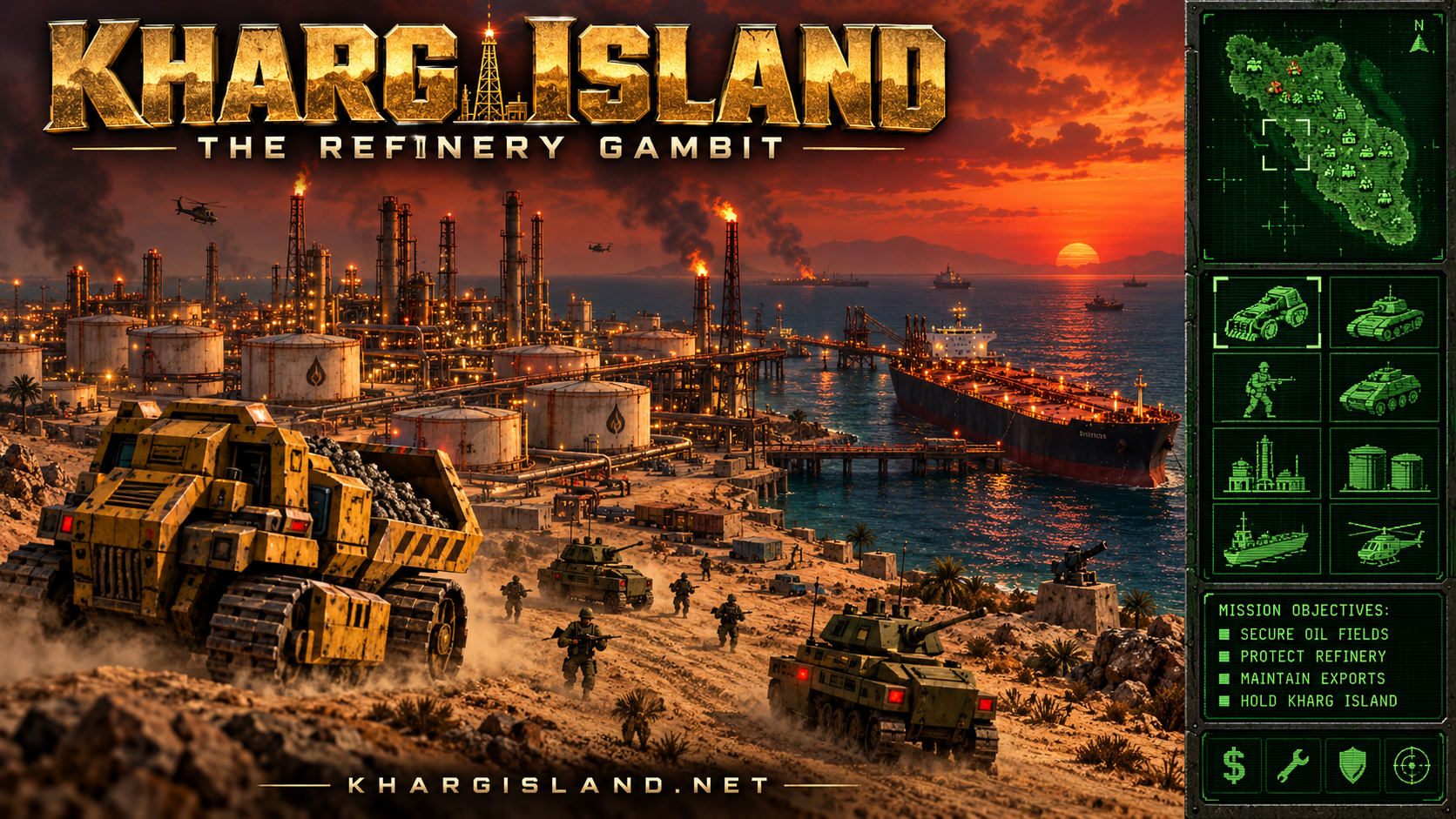
Anyone who played Command & Conquer in 1995 learned to attack the harvesters.
You could expend a perfectly respectable army battering the enemy’s defenses, or you could interrupt the machinery paying for them. Destroy the harvesters, threaten the refinery, and watch an intimidating military establishment develop an immediate interest in economy.
It was an excellent lesson in strategy, delivered by a lumbering vehicle whose driver possessed the survival instincts of a garden chair.
The latest reporting on Kharg Island invites the comparison. It also reveals where the game stops being useful.
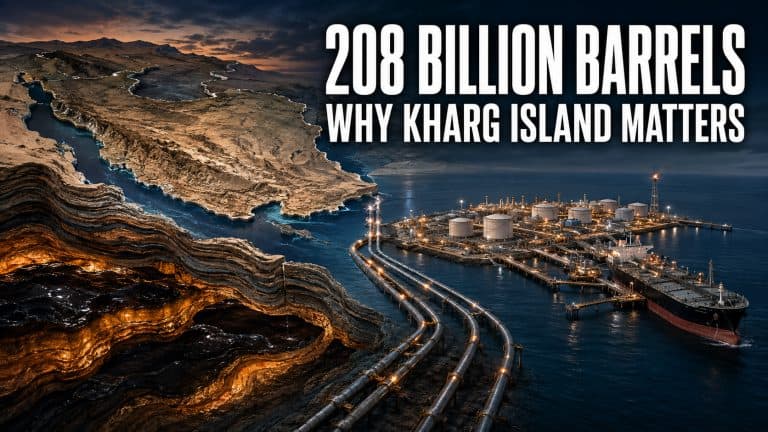
According to Erem News, as summarized in the October 19 intelligence brief, Donald Trump is considering strikes against Kharg’s oil infrastructure. Storage tanks, pipelines and loading facilities are reportedly among the possible targets.
The account relies on anonymous American diplomatic sources. It remains unconfirmed. There is no established strike order here, much less evidence that an attack has occurred.
Nevertheless, the reported proposal deserves examination. Particularly because the refinery, to continue our comparison, may already have stopped receiving its harvesters.
Attacking an economy that has already been interrupted
The supplied brief attributes to Kpler the finding that Iran has loaded no crude or condensate cargo since August 25.
If that assessment is accurate, the immediate purpose of bombing Kharg becomes considerably less straightforward than the phrase “cutting off the oil” suggests.
The exports are already interrupted.
The tanks, pipelines and berths still matter, of course. Infrastructure does not become worthless when it falls idle. It retains the capacity to function again when the obstruction is removed.
That is precisely the point.
Destroying an idle export terminal could damage the recovery that a diplomatic settlement would otherwise permit. A blockade may be lifted by a political decision. A demolished loading facility requires money, equipment, workers and time.
The pressure would reach beyond the present confrontation into the peace that might follow it.
Whether that is the intention behind the reported discussions has not been established. But it is a consequence that anyone advocating such an operation ought to explain.
What concession is this destruction expected to purchase? What response has been anticipated? And how would the resulting agreement remain attractive to a government whose means of benefiting from it had just been damaged?
These questions are slightly more demanding than selecting a building and clicking “attack.”
The trouble with the victory screen
In Command & Conquer, the relationship between resources and military power is admirably legible. Tiberium enters the refinery. Credits arrive. Units emerge from factories.
The real world has accounting complications.
Iran’s oil infrastructure supports a state and its coercive institutions. It also supports an economy inhabited by people who possess no meaningful authority over those institutions. Damage intended to weaken the former will not politely exempt the latter.
This does not make energy infrastructure irrelevant to warfare. It makes the consequences of attacking it larger than the target itself.
Nor does the Gulf resemble a battlefield with two conveniently colored factions.
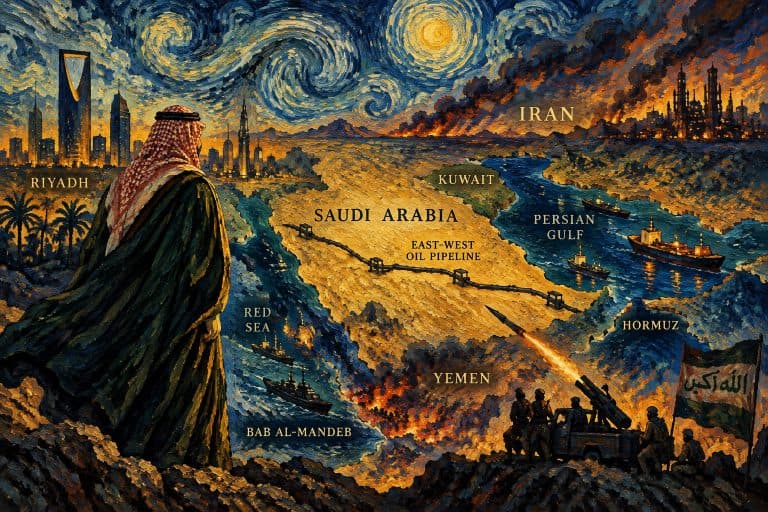
The brief describes Saudi exports shifting toward the Gulf coast while maritime threats there increase. It also describes attacks, crowded anchorages and competing accounts of incidents at sea. Each claim requires appropriate verification, but the broader strategic problem is recognizable: one country’s attempt to escape danger can move its commerce toward another danger.
Oil must be loaded, transported, insured, refined and delivered. A successful attack at one point can impose costs across the system.
There is no reason to assume those costs will remain with the government being targeted.
Every faction has a briefing officer
The original Command & Conquer understood that a war arrives accompanied by an explanation of itself.
GDI and Nod offered competing accounts of authority, liberation and the world they intended to create. Their briefings told the player what mattered, who threatened it and why the next operation was necessary.
Real governments perform this function without the courtesy of identifying the cutscene.
A threatened attack becomes an instrument of peace. Retaliation becomes the restoration of deterrence. Another round of destruction becomes the necessary preliminary to negotiations.
Sometimes an argument for military action withstands examination. Its vocabulary should never be allowed to substitute for that examination.
Iran’s rulers deserve the same treatment. Threats against neighboring energy facilities do not become more defensible because Tehran describes them as resistance. The crews and workers exposed to retaliation have not volunteered to serve as punctuation in someone else’s strategic message.
The obligation is to follow the consequences, including those omitted from the briefing.
One report is still one report
There is a further complication before anyone begins discussing the reported Kharg option as settled policy.
The supplied brief identifies Israel Hayom and JFeed’s coverage as dependent on Erem’s original account. It also describes social-media amplification that made the sourcing appear stronger or more direct.
Repetition can create the impression of confirmation without supplying any.
An anonymous report may reflect genuine deliberations, an attempt to exert pressure, an incomplete account or something that proves incorrect. The available evidence does not establish which explanation applies.
For now, the proper description remains an unconfirmed report about a possible strike.
That may disappoint those who prefer their foreign policy served as a succession of imminent explosions. It has the advantage of being accurate about what is known.
What would victory leave standing?
The useful lesson from Command & Conquer is that military power depends on an economic foundation.
Its limitation is that the mission ends.
The player receives a verdict. The map closes. Nobody asks him to restore the terminal, negotiate compensation, reassure shipowners or explain to a family why the economy remains broken after the declared success.
At Kharg, those would be part of the outcome.
If the export-loading assessment in the brief holds, destroying the island’s infrastructure would chiefly threaten capacity that a settlement might restore. That could increase pressure on Tehran. It could also diminish the economic reward for reaching an agreement and extend the damage long after the immediate confrontation.
A serious strategy must account for both possibilities.
The question is therefore larger than whether the refinery can be destroyed.
It is what the destruction would achieve—and what everyone would be expected to live with after the victory announcement.