Trump Says Strait of Hormuz Will Become U.S. Territory as Iran Pushes Back

August 15, 2026
President Donald Trump has dramatically escalated the war of words surrounding the Strait of Hormuz, saying the strategically vital waterway could soon be declared a territory of the United States.
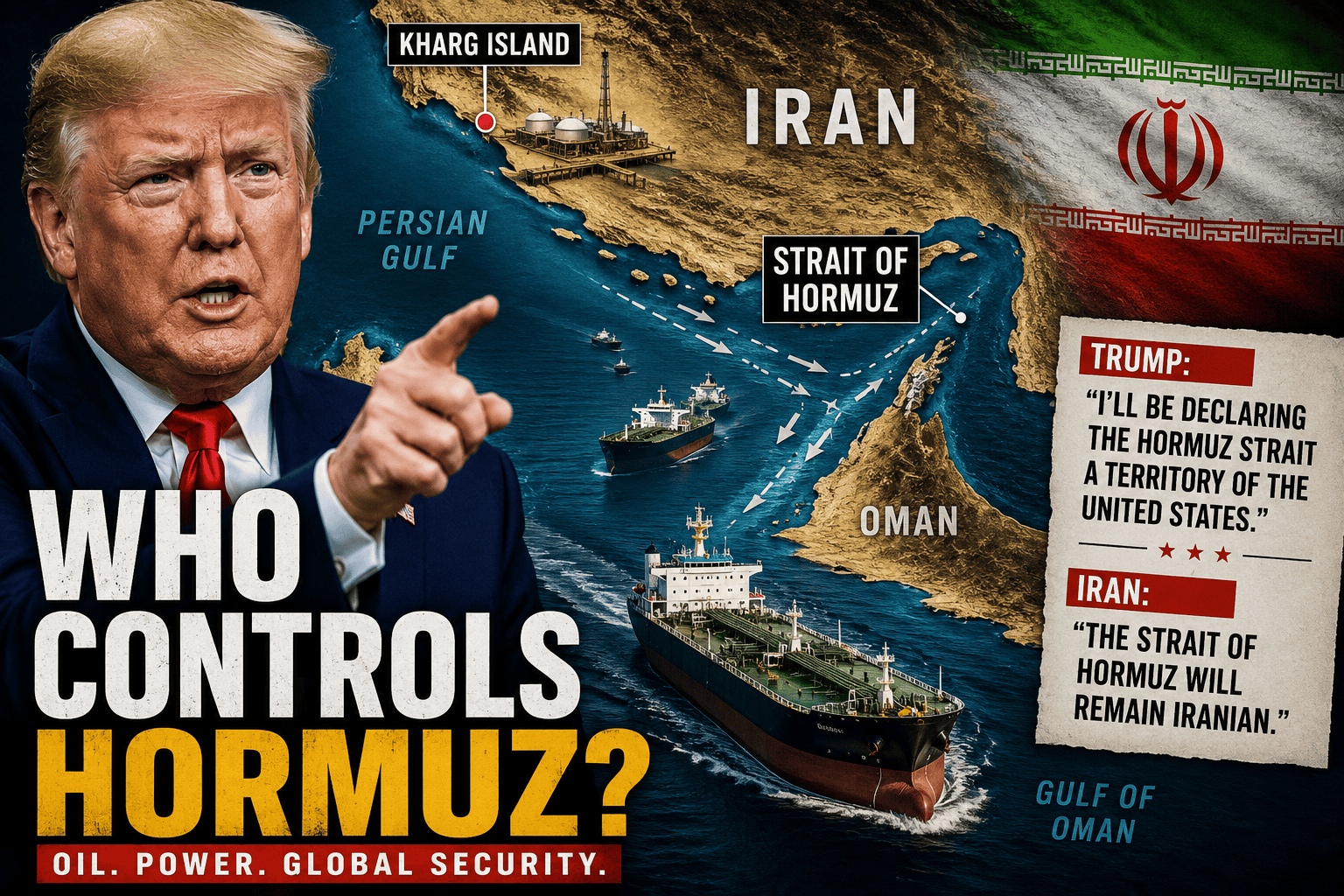
Speaking Friday, August 14, at the David S. Mack Center for Training and Intelligence in Garden City, New York, Trump said that after the United States finishes defeating Iran, he would be “declaring the Hormuz Strait a territory of the United States.”
The extraordinary statement comes amid an increasingly dangerous confrontation over control of one of the world’s most important energy corridors.
Iran responded quickly.
Iranian Deputy Foreign Minister Kazem Gharibabadi rejected Trump’s declaration, insisting that the Strait of Hormuz “has been Iranian, is Iranian, and will remain Iranian.”
The competing claims add another layer of uncertainty to a waterway already at the center of the conflict between Iran and the United States.
Why the Strait of Hormuz Matters
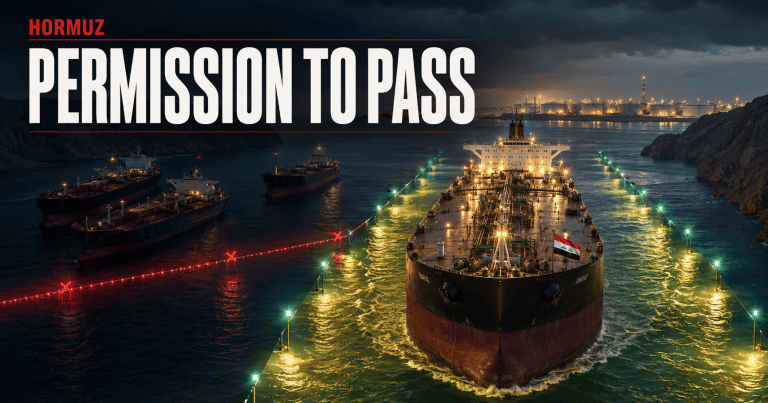
The Strait of Hormuz is a narrow maritime passage connecting the Persian Gulf with the Gulf of Oman and Arabian Sea.
Despite its relatively small geographic footprint, its importance to the global economy is enormous.
Before the current war, roughly one-fifth of the world’s oil passed through the Strait, making disruption there capable of affecting crude prices, gasoline costs, shipping rates and energy markets thousands of miles away.
The current conflict has dramatically reduced normal tanker traffic through the waterway.
Iran has attempted to use control of shipping through Hormuz as economic and political leverage, while the United States has sought to enforce its own control over maritime traffic in the region.
That struggle has transformed the Strait from an important shipping route into one of the central pressure points of the war.
The Connection to Kharg Island
For Kharg Island, the confrontation over Hormuz is particularly important.
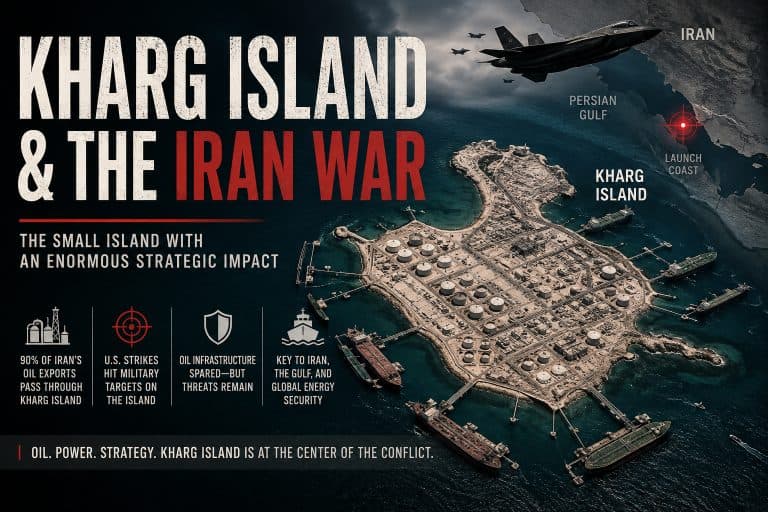
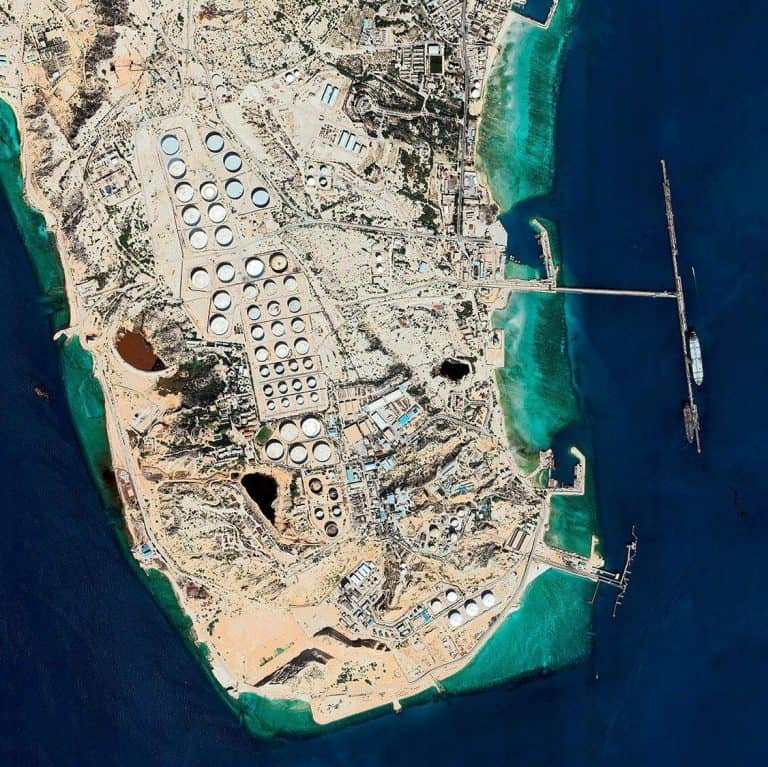
Kharg Island contains Iran’s primary crude oil export infrastructure and has historically handled the overwhelming majority of the country’s seaborne crude exports.
But loading oil onto a tanker at Kharg is only part of the journey.
Tankers departing the island must travel through the Persian Gulf before reaching the Strait of Hormuz and the open waters beyond it.
That means Iran’s ability to operate Kharg Island and its ability to maintain reliable shipping through Hormuz are closely connected.
Recent activity has made that relationship even more important.
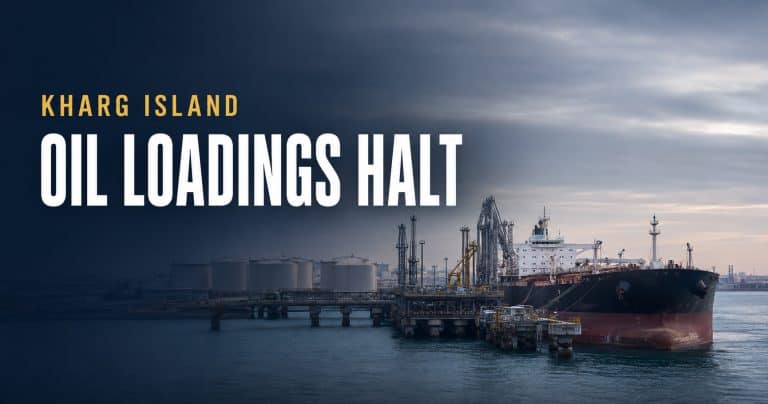
After an extended period of inactivity, tanker loading activity has recently returned to Kharg Island, raising questions about whether Iran can restore meaningful oil exports while shipping through Hormuz remains severely disrupted.
A National Iranian Tanker Company supertanker was observed loading approximately two million barrels of crude at Kharg Island on August 14.
The timing is striking: activity is returning to Iran’s principal oil export terminal just as the political and military battle over the route those exports must eventually travel is intensifying.
Iran Says Hormuz Will Remain Under Its Control
Iran has rejected Trump’s suggestion that the United States could claim the Strait.
Gharibabadi said Iran would continue enforcing its blockade and portrayed Tehran, rather than Washington, as the power determining when the waterway opens and closes.
Iranian Foreign Minister Abbas Araghchi has separately indicated that discussions involving Oman concern potential shipping routes through the Strait, while saying Tehran has not yet decided whether broader negotiations with Washington will resume.
The disagreement demonstrates how central Hormuz has become to any potential settlement.
For Iran, control of the Strait provides enormous economic leverage.
For the United States, restoring reliable commercial shipping would relieve pressure on global energy markets while reducing Iran’s ability to use the waterway as a bargaining tool.
Neither side currently appears willing to concede control.
Shipping Threats Continue
The confrontation is not merely rhetorical.
Commercial vessels operating around the Strait continue to face significant danger.
The United Arab Emirates said Iran attacked two vessels affiliated with the Abu Dhabi National Oil Company on Thursday. Another ADNOC-affiliated vessel was attacked while crossing the Strait on Friday evening, according to the UAE.
The United Kingdom Maritime Trade Operations Centre also reported that a bulk carrier near Kumzar, Oman, was struck by an unknown projectile Friday evening. Its crew was reported safe.
These incidents demonstrate the enormous challenge involved in restoring normal commercial shipping even if diplomatic progress eventually occurs.
Oil companies, tanker operators and insurers must consider not only whether the Strait is technically open, but whether vessels can safely transit it.
Could the United States Actually Claim the Strait?
Trump’s comments do not themselves change the legal status of the Strait of Hormuz.
The waterway lies between Iran and Oman, and international maritime law governing passage through international straits cannot simply be rewritten by a unilateral declaration from Washington.
Trump’s statement is therefore more significant as a signal of American intentions toward control of the waterway than as an immediate change in sovereignty.
Whether the administration intends to pursue any formal territorial claim remains unclear.
What is clear is that both Washington and Tehran are increasingly describing control of Hormuz in terms that extend far beyond freedom of navigation.
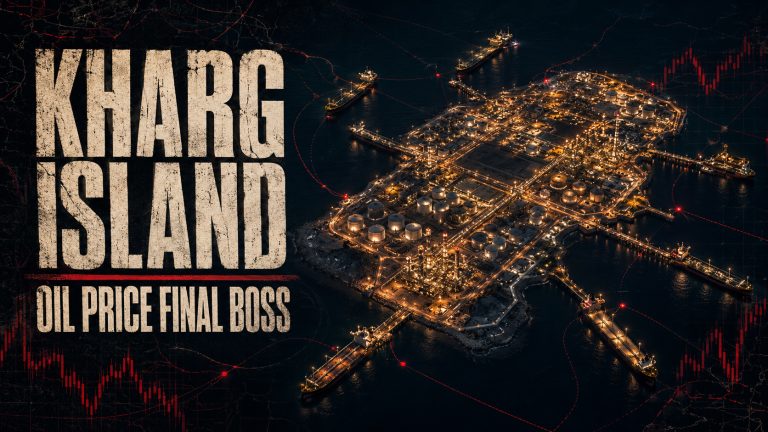
Kharg Island Remains at the Center of the Oil Story
The confrontation creates an unusual situation for Iran’s oil industry.
Kharg Island can resume loading crude, but the economic value of those operations depends heavily on Iran’s ability to move that oil safely into international markets.
That makes developments at Kharg Island an important indicator of whether Iranian oil exports are actually recovering.
One tanker loading crude is significant.
A sustained stream of tankers departing Kharg, successfully passing through the Strait of Hormuz and reaching international buyers would be considerably more important.
For now, the world is watching both locations.
Kharg Island represents Iran’s ability to put oil onto ships.
The Strait of Hormuz increasingly represents the battle over whether those ships can reach the rest of the world.
As Washington and Tehran openly challenge each other’s claims of control, the narrow passage connecting the Persian Gulf to international waters may remain one of the most consequential pieces of geography in the conflict.